When Delhi Danced: Echoes of Umrao Jaan in the Capital’s Forgotten Mehfils
Date
When Delhi Danced: Echoes of Umrao Jaan in the Capital’s Forgotten Cultural Past
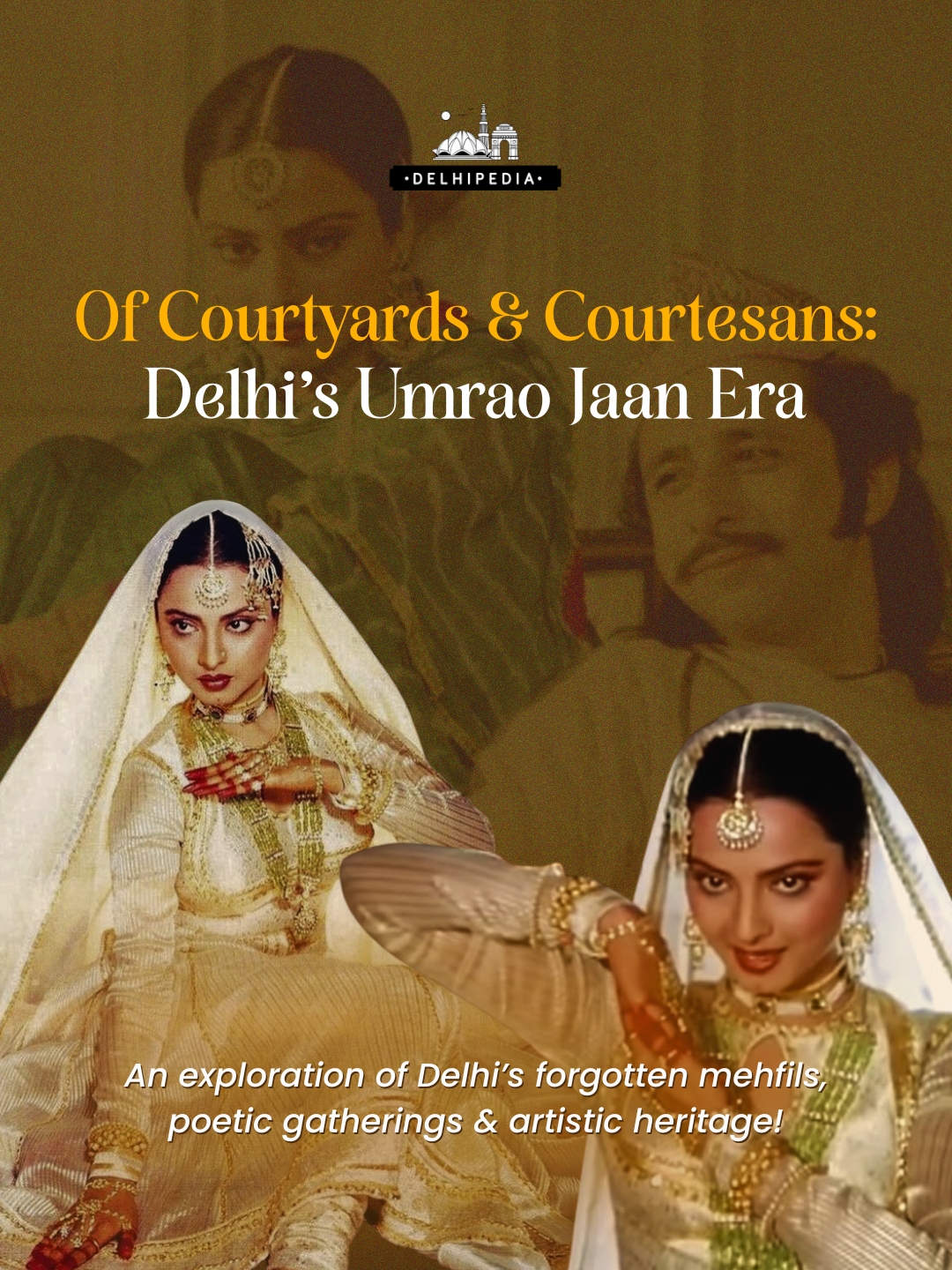
Muzaffar Ali’s Umrao Jaan is more than just a film—it’s a poetic window into a forgotten world of grace, culture, and artistic brilliance. While the story unfolds in the Awadhi court of 19th-century Lucknow, its cultural heartbeat echoes through the lanes of Old Delhi too. With its recent 4K re-release, the film has reignited nostalgia not just for its cinematic beauty, but also for the era it represents—one where poetry, dance, and music reigned supreme.
But did you know that Delhi once had its own version of Umrao Jaan’s world?
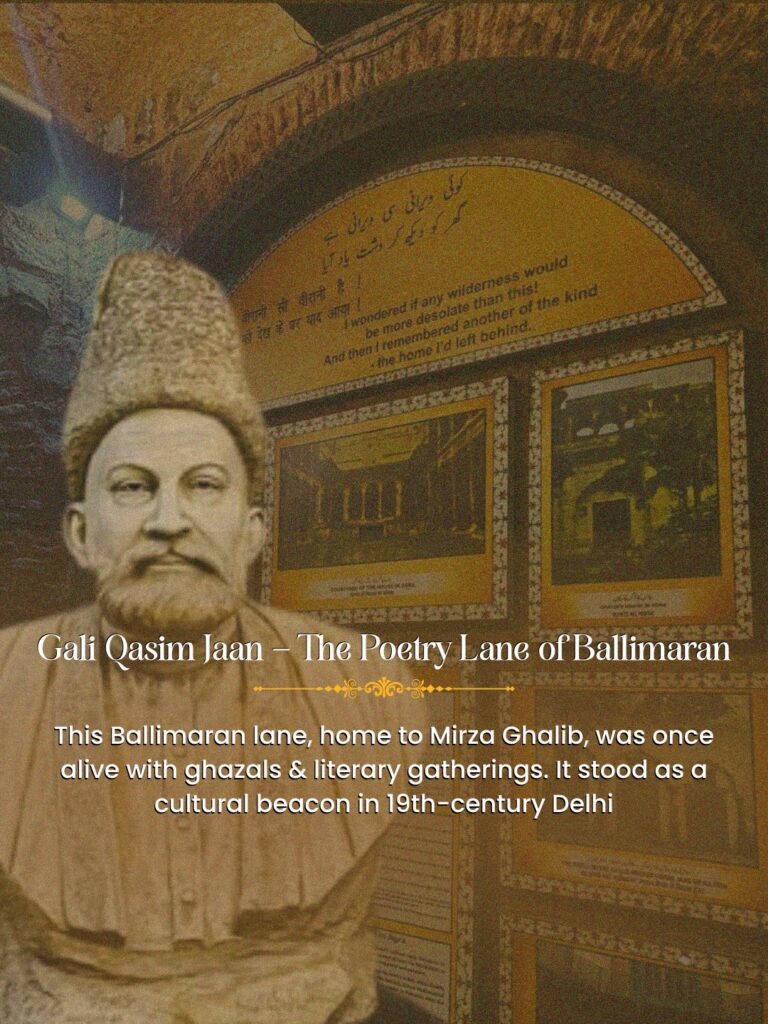
Gali Qasim Jaan – Delhi’s Poetry Lane
Located in Ballimaran, Gali Qasim Jaan was once home to Mirza Ghalib—the master of Urdu poetry. In the 19th century, this lane wasn’t just residential; it was alive with literary gatherings, ghazal recitations, and musical baithaks. Much like Lucknow’s poetic circles, this small stretch in Shahjahanabad was a nucleus of refined cultural expression.
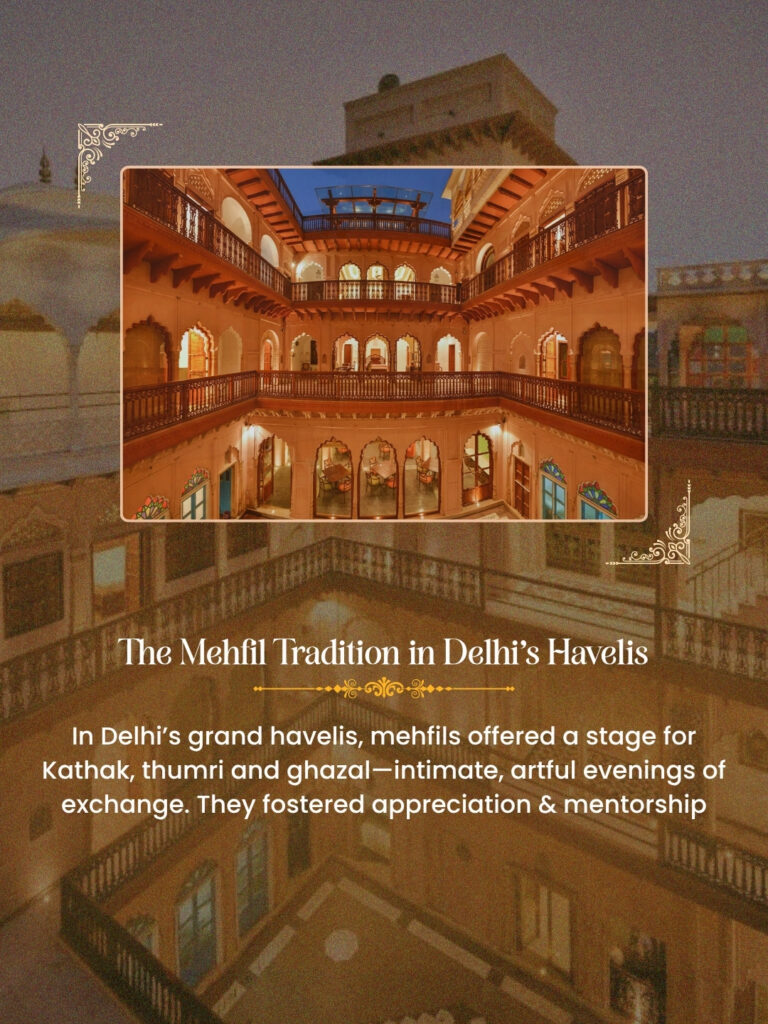
The Mehfil Tradition in Havelis
Delhi’s noble families hosted mehfil evenings within their sprawling havelis—private performances where Kathak dancers, classical vocalists, and poets shared their art with intimate audiences. These weren’t passive spectacles but forums of exchange, mentorship, and deep appreciation. Artistic excellence was nurtured in these spaces.
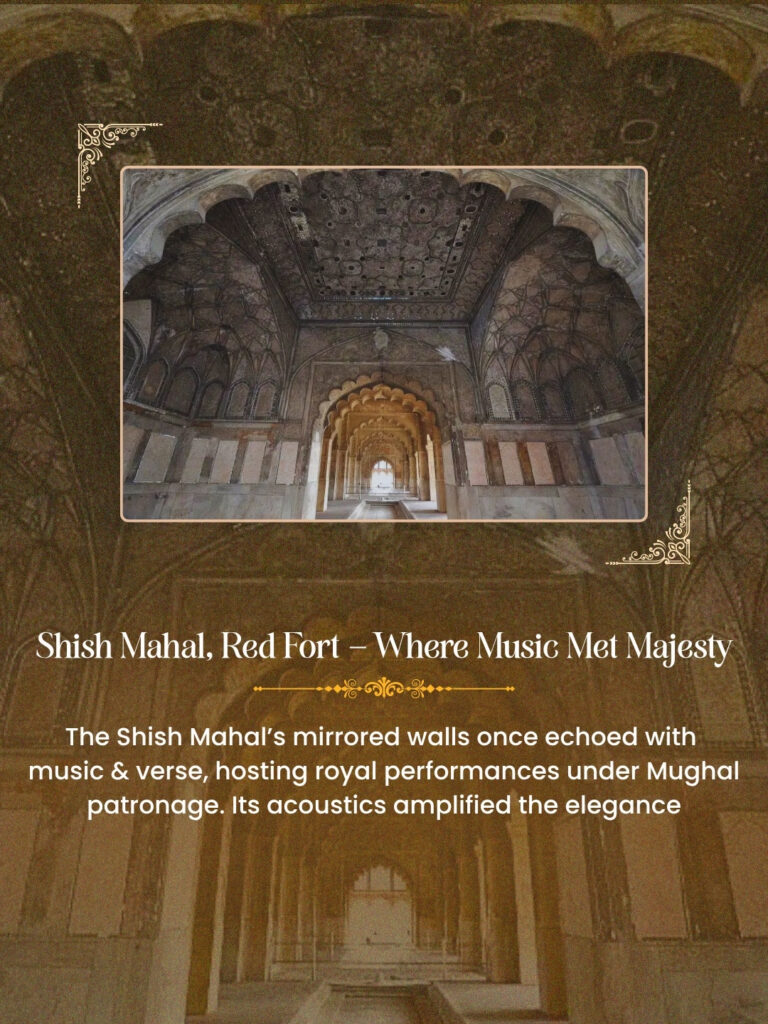
Shish Mahal – Music in the Palace of Mirrors
Tucked inside the Red Fort, the Shish Mahal or ‘Palace of Mirrors’ was one of the grandest cultural venues in Delhi’s history. With acoustics enhanced by mirrored walls, this was where Mughal royalty enjoyed private performances of poetry and music. The elegance of such settings is reminiscent of Umrao’s own musical evenings.
Artists, Teachers, and the Learning City
Delhi’s cultural roots ran deep through its people. Areas like Chandni Chowk, Daryaganj, and Turkman Gate were home to gharanas (lineages) of classical musicians, dancers, and poets. Knowledge was passed down generations in both formal and informal setups—sometimes in a courtyard, sometimes in a room above a shop.
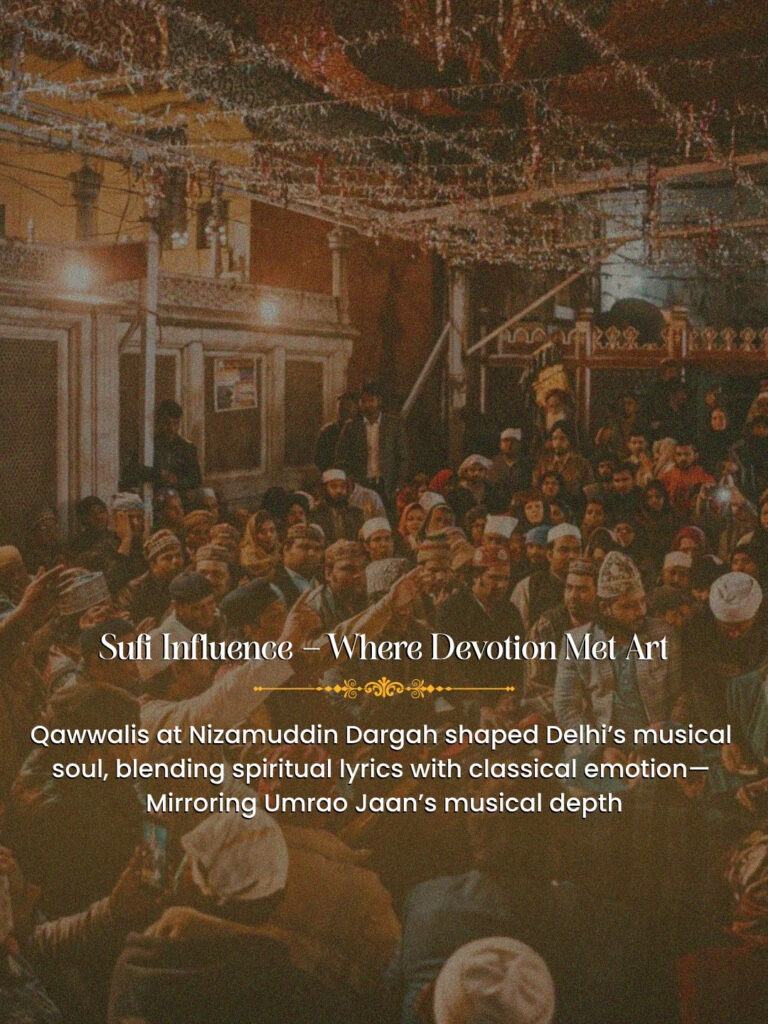
Sufi Shrines and Qawwali Nights
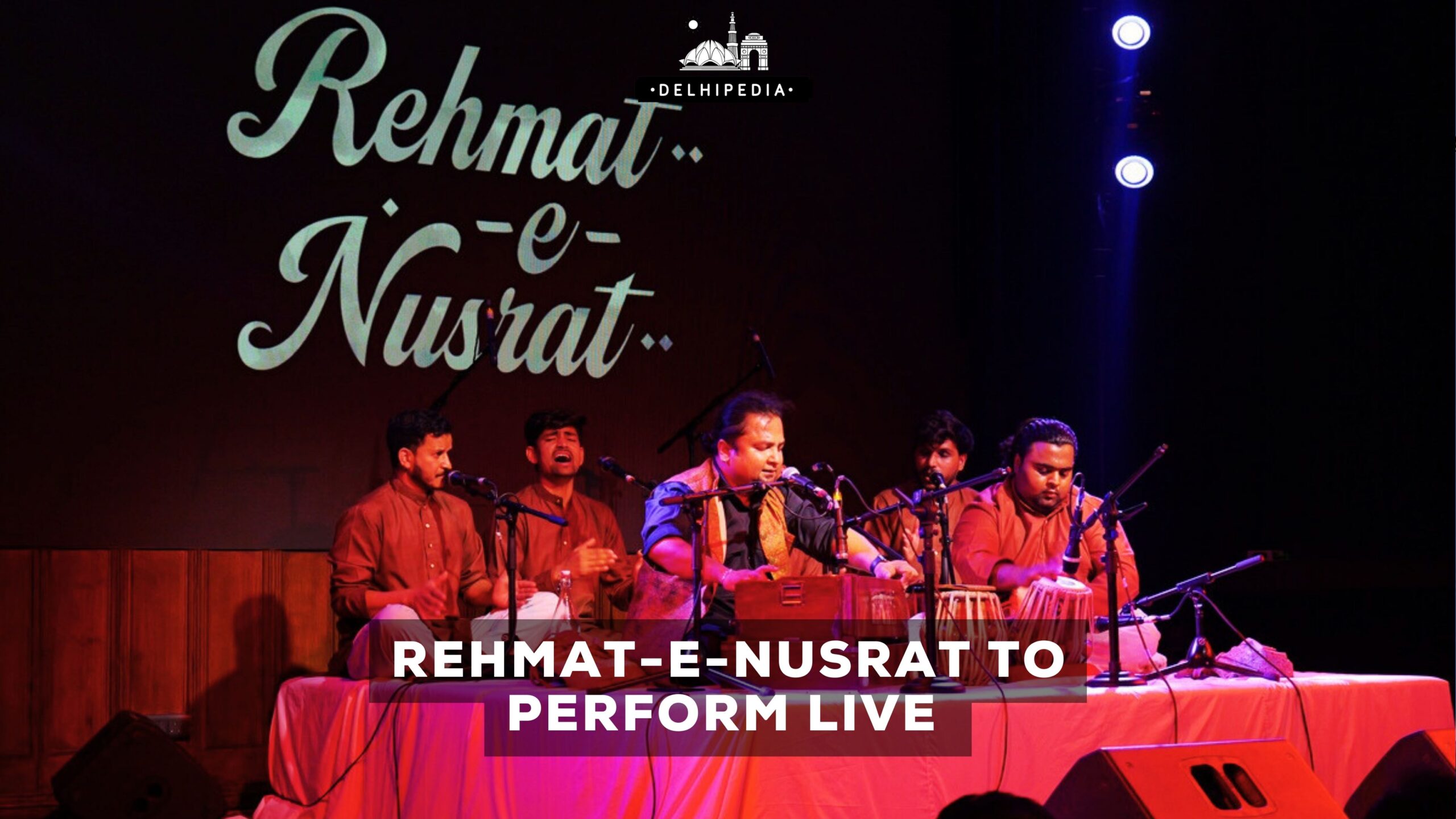
Beyond the palaces and havelis, Delhi’s Sufi shrines played a vital cultural role. Hazrat Nizamuddin Dargah, in particular, nurtured the tradition of qawwali. These devotional performances, rooted in love and longing, often mirrored the emotional intensity of forms like thumri and dadra that defined Umrao Jaan’s repertoire.
Disappearing Echoes of a Rich Legacy
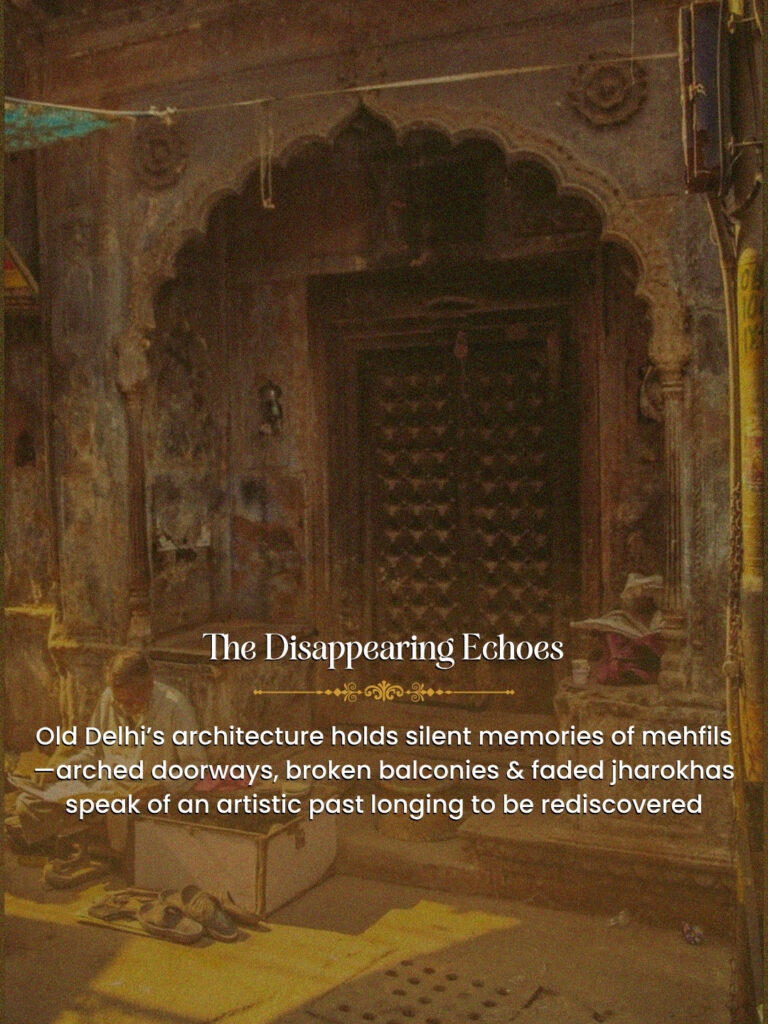
Today, many of these spaces have been erased or hidden behind layers of modern construction. Yet, if you walk through Old Delhi’s alleys, you might still find hints—a worn jharokha, an arched doorway, a crumbling haveli—that whisper tales of evenings lit by music, candlelight, and art.
Reviving the Artistic Soul of Delhi
As Umrao Jaan returns to the big screen, it invites us to revisit not just its story, but the stories buried within our own city. Delhi once danced to the same rhythm—it’s time we listen again. If you know of any forgotten cultural corners of Delhi, tag us or send a message. We’d love to feature your discovery.