
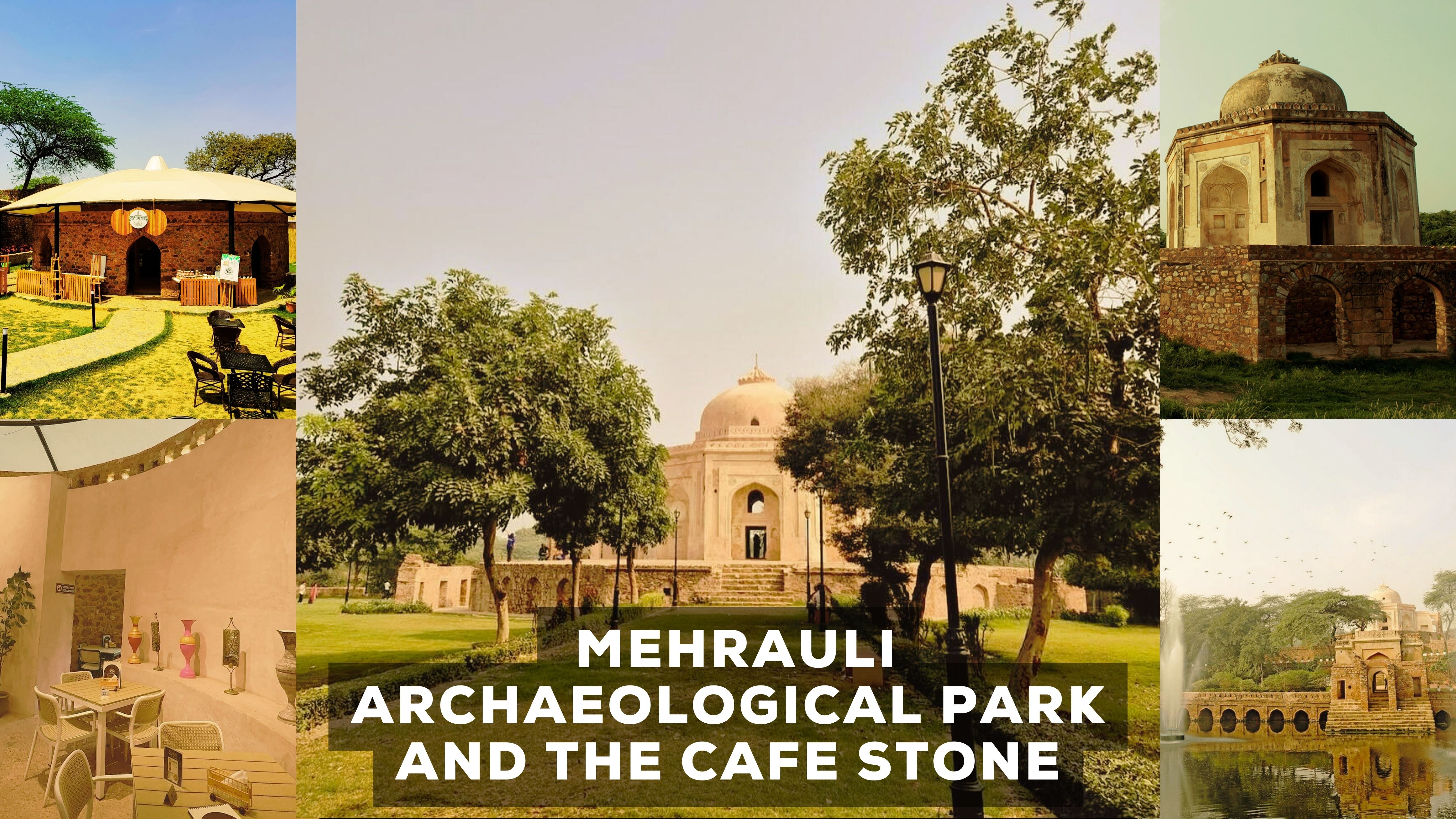
Plan Banao: Mehrauli Archaeological Park and The Cafe Stone – Delhi’s 1000-Year-Old Secret
Imagine stepping into a world where every stone whispers tales from centuries ago, a place where history and mystique collide just minutes from the city’s hustle. That’s Mehrauli Archaeological Park for you — spread across nearly 200 acres in South Delhi, right next to the iconic Qutub Minar.
A Thousand Years of History… and More
This park is the only part of Delhi with over 1,000 years of continuous habitation. From the Tomar Rajputs who built Lal Kot in the 11th century to the Khaljis, Tughlaqs, Lodis, Mughals, and even the British, every era has left its mark here.
You’ll find:
-
Lal Kot – the oldest surviving fort in Delhi
-
Balban’s Tomb – India’s first true arch and dome from the 13th century
-
Jamali-Kamali Mosque & Tomb – Sufi-inspired artistry from the early 1500s
-
Baolis (Stepwells) – including Rajon Ki Baoli and Gandhak Ki Baoli, each with unique history and design
-
Hauz-i-Shamsi – a medieval reservoir with a legend about a Sultan’s vision
Waterways & Walled Wonders
The baolis here are a world in themselves:
-
Anangtal Baoli, built in the 11th century, is believed to be Delhi’s oldest stepwell.
-
Gandhak Ki Baoli has sulphur-rich water that locals once believed had healing powers.
-
Rajon Ki Baoli is a striking four-level stepwell with arched corridors, a photographer’s delight.
A British Twist — and a Hidden Café
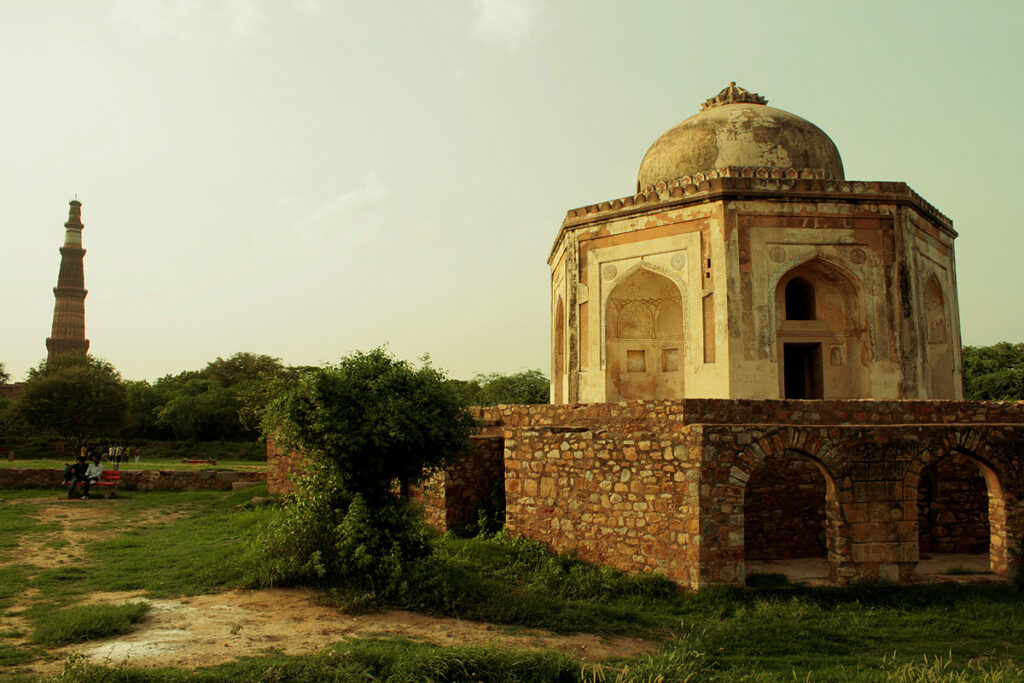
History didn’t stop with the Mughals. In the 19th century, British officer Sir Thomas Metcalfe added landscaped gardens, pavilions, and even a boathouse to the park — a reminder that every era leaves its footprint.
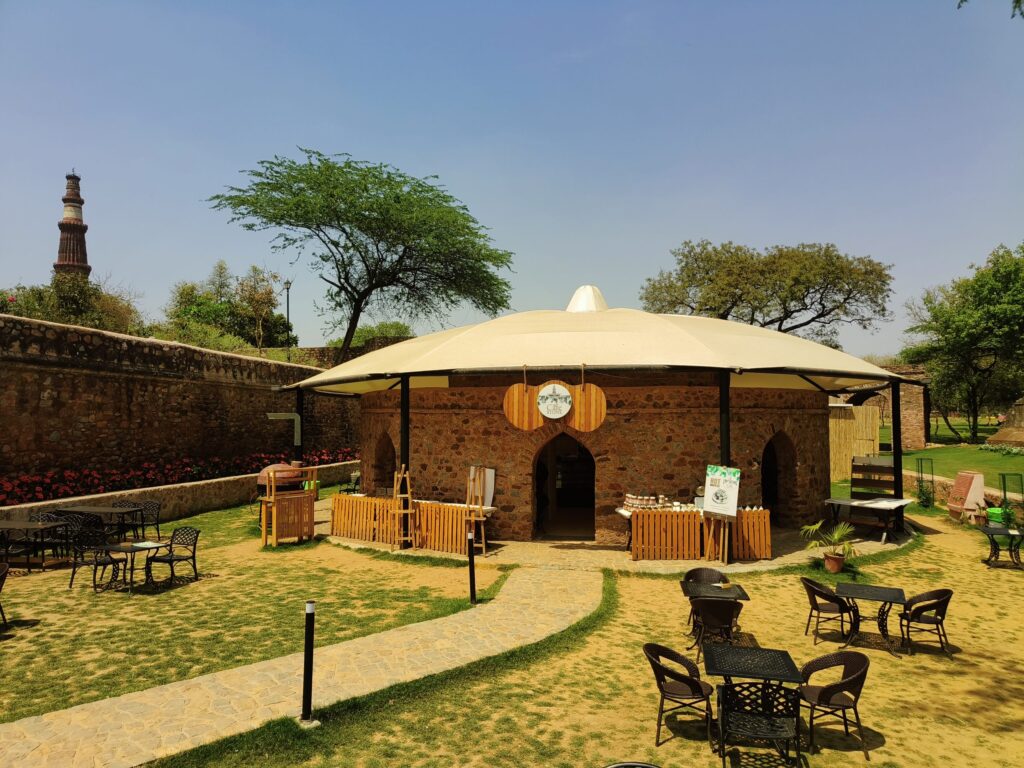
And tucked away inside this heritage wonder is a peaceful retreat — The Cafe Stone.
It’s not just any café; it’s an experience. Entirely vegetarian, The Cafe Stone blends rustic charm with calm, green surroundings. Wooden benches, cane furniture, and open garden seating make it feel more like a friend’s backyard than a commercial café. The menu keeps it simple—chai, coffee, sandwiches, pakoras, and a few light snacks—perfect for a breather between long walks in the park.
What makes it truly special is the ambience: the sound of rustling leaves, occasional peacock sightings, and the backdrop of centuries-old walls. Whether you’re catching your breath after exploring the ruins or just want a quiet spot to read, The Cafe Stone is a pause button in the middle of Delhi’s chaos.
Why It’s a Must-Visit
-
Layered history – Experience Delhi from the Tomar era to British times in one walk.
-
Quiet escape – Enjoy a calm break at The Cafe Stone between your heritage trail.
-
Offbeat charm – Far from the crowds, it’s a mix of history, nature, and hidden gems.
Quick Visitor Tips
-
Best time to visit: Mornings or late afternoons, October to March.
-
Getting there: Right next to Qutub Minar, accessible via Qutub Minar Metro station.
-
Don’t miss: Lal Kot, Balban’s Tomb, Jamali-Kamali, the stepwells, Hauz-i-Shamsi, and The Cafe Stone.
-
Carry: Water, comfortable shoes, and a curious mind.