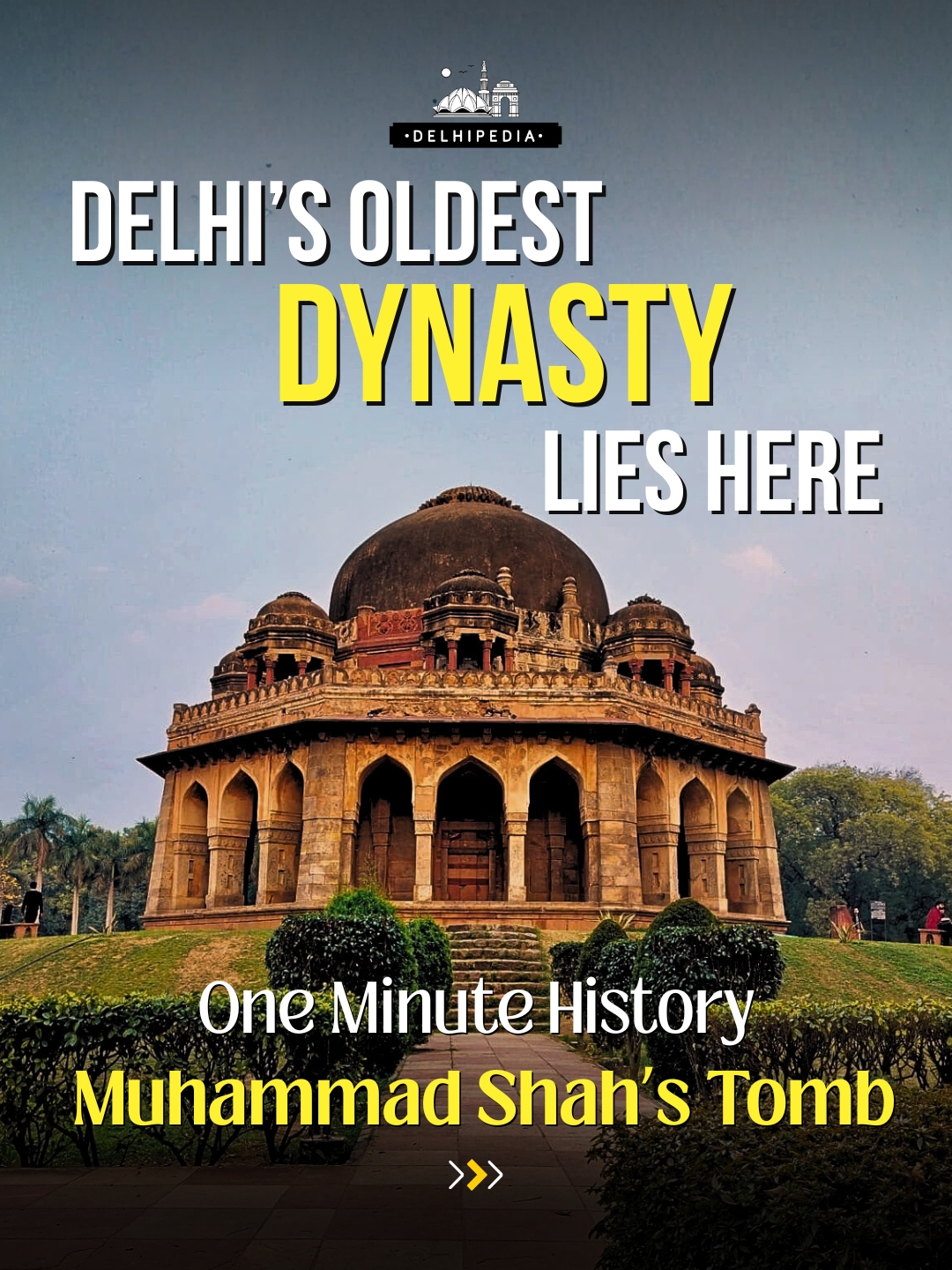
Hidden among the lawns of Lodhi Garden stands the tomb of Muhammad Shah IV — one of the few surviving monuments from the brief but historically significant Sayyid dynasty. While thousands walk past it during morning walks and picnics, few realise that this elegant structure marks the resting place of a dynasty that ruled Delhi nearly six hundred years ago.
Who Was Muhammad Shah IV?
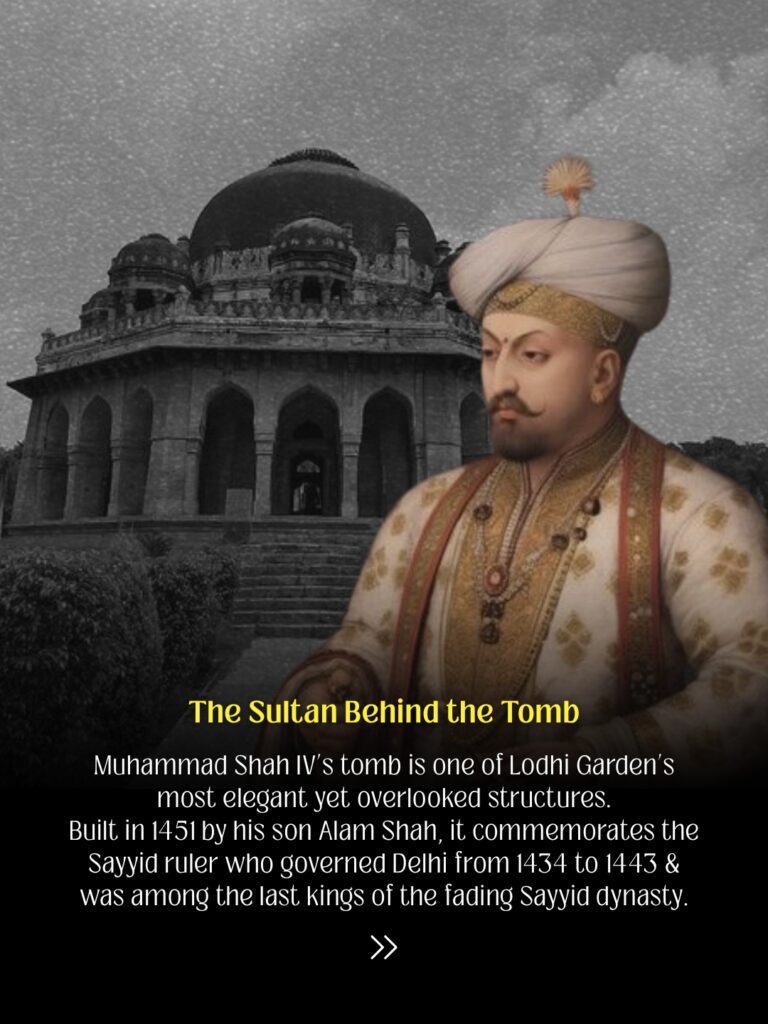
Muhammad Shah IV was a ruler of the Sayyid dynasty, which governed Delhi from 1414 to 1451. He ruled from 1434 to 1443, succeeding his uncle Mubarak Shah. The Sayyids claimed descent from the Prophet Muhammad, yet their control over Delhi was short-lived and politically fragile.
The tomb was built around 1451 by his son, Alam Shah, just as the Sayyid dynasty was coming to an end. Soon after, the Lodis took over Delhi, marking the beginning of a new chapter in the Delhi Sultanate.
Today, this tomb remains one of the very few architectural footprints left by the Sayyid rulers.
A Rare Example of Sayyid Architecture
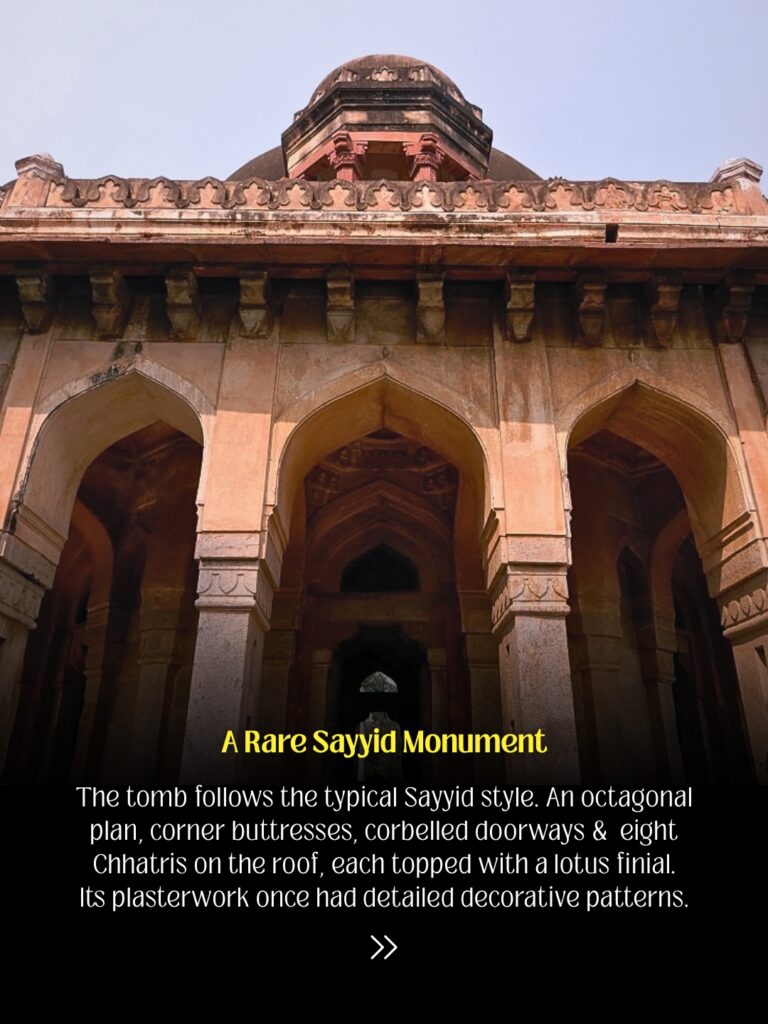
Muhammad Shah’s Tomb represents the typical style of the era — modest yet refined, blending early Sultanate principles with emerging Indo-Islamic influences.
Key architectural features include:
An octagonal plan supported by corner buttresses
Corbelled doorways
Eight chhatris around the main dome
Lotus finials atop each chhatri
Decorative plasterwork, traces of which can still be seen
The combination of domes, chhatris, brackets and Islamic ornamentation reflects the transitional nature of Delhi’s architecture in the mid-15th century.
The Octagonal Layout
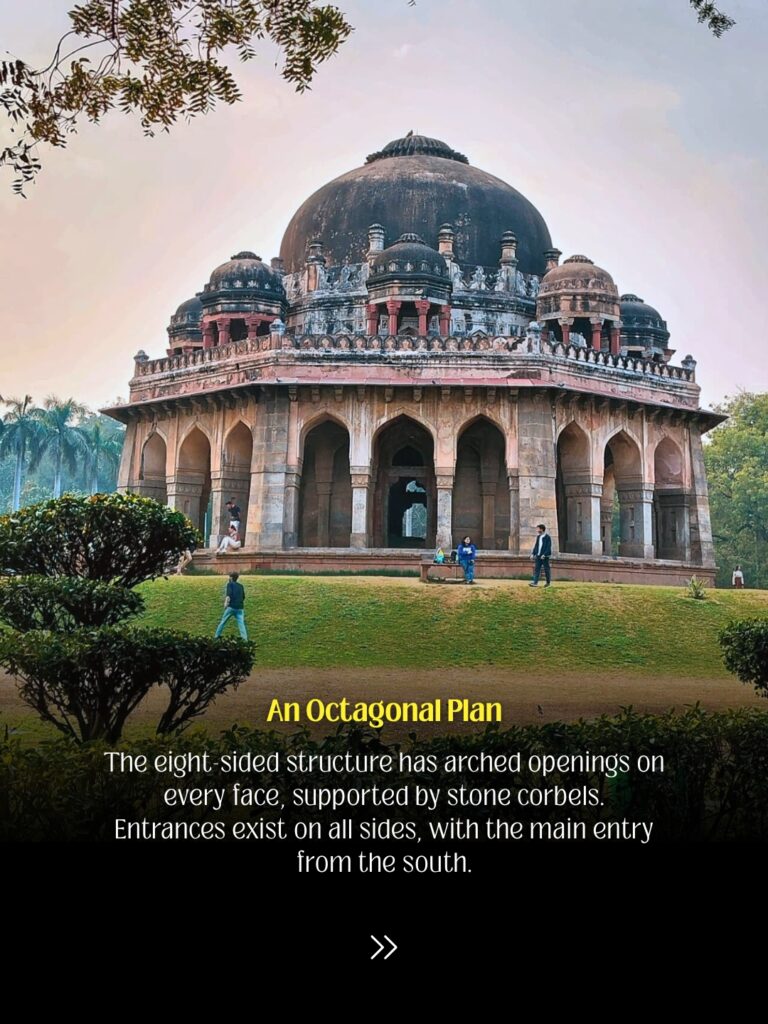
Built on an eight-sided base, the tomb follows the early Sultanate preference for octagonal funerary monuments. Each side features large arched openings, allowing sunlight and fresh air to filter through naturally.
The main entrance lies on the southern side, although the structure has openings on all eight faces. Stone corbels support the arches, giving the monument strength as well as symmetry.
Indo-Islamic Elements
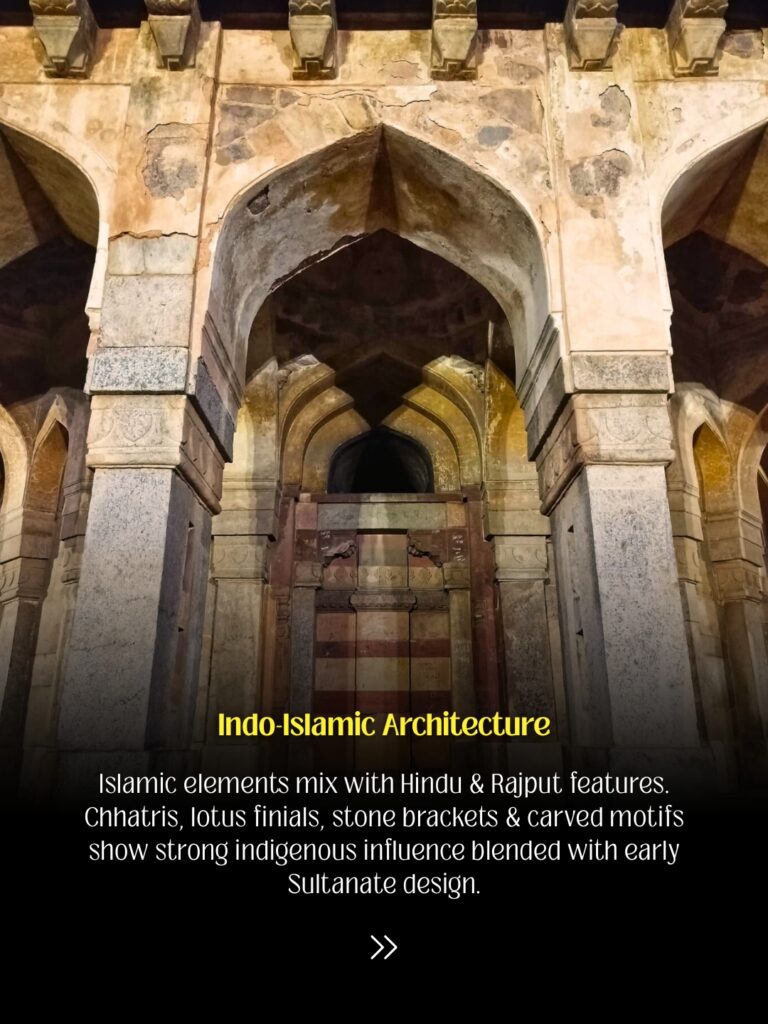
This tomb also reflects the evolution of Indo-Islamic architecture — a fusion between the structural ideas brought by Central Asian rulers and the craftsmanship of local Indian artisans.
You can see this blend in:
Chhatris (a feature of Rajput and Hindu temple architecture)
Lotus finials, a motif common in Indian religious structures
Carved stone brackets supporting roof projections
Floral and geometric patterns seen in Hindu temples
Islamic domes and calligraphy
This mix of styles would later evolve further under the Lodis and reach its peak during the Mughal period.
Inside the Tomb
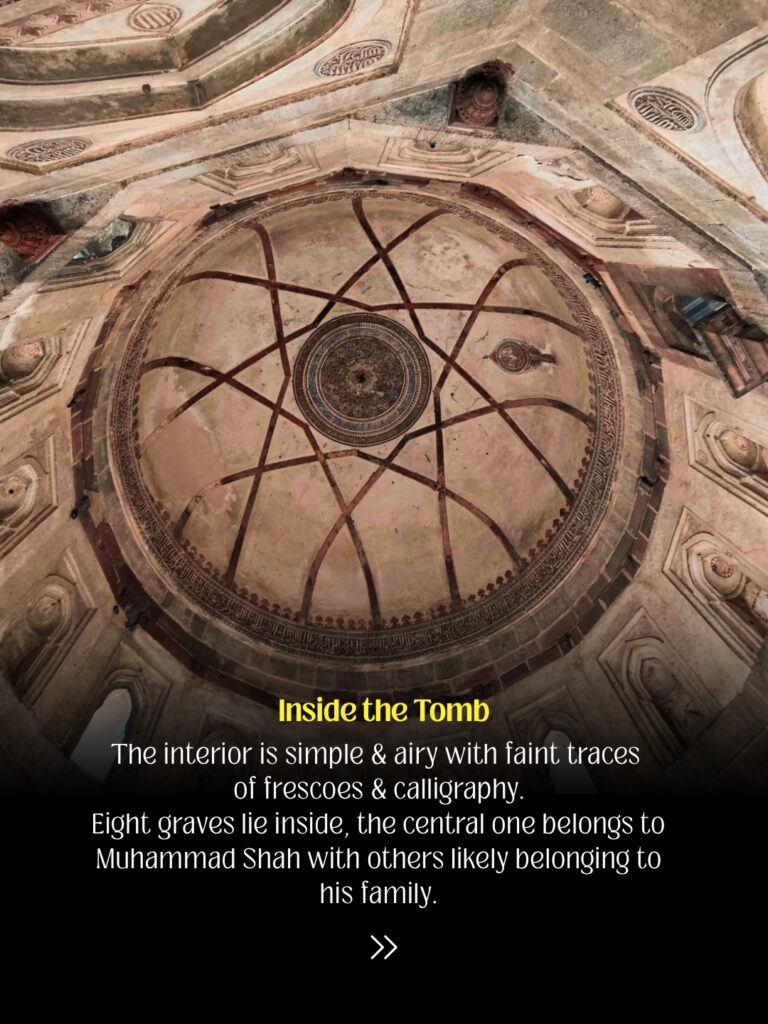
The interior is simple, calm and filled with soft natural light.
Inside, you will find:
A central cenotaph representing Muhammad Shah
Seven additional graves, likely belonging to family members
Faint traces of frescoes, arabesques, and calligraphic motifs
A surrounding verandah approximately 15 metres in diameter
Although much of its paint and plaster has faded with time, the tomb’s quiet elegance remains intact.
In the Heart of Lodhi Garden
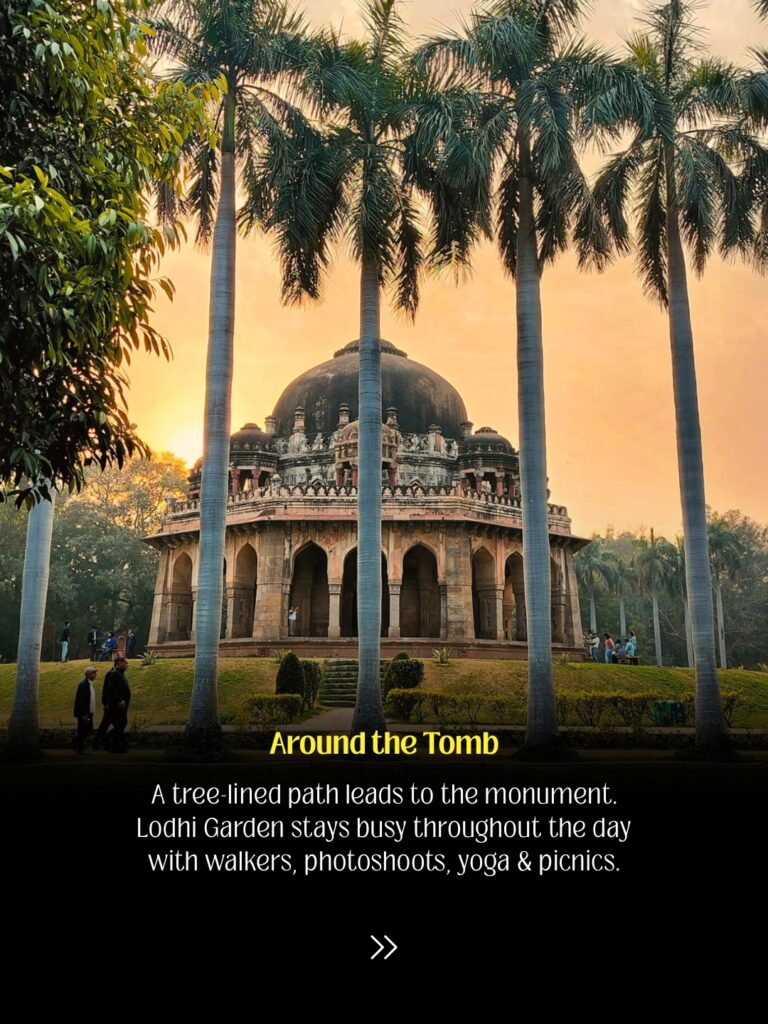
The path leading to the tomb is lined with palm trees and lush greenery, making it one of the most scenic monuments in the garden. Throughout the day, you will find people walking, practising yoga, taking photos, and enjoying the surroundings — yet the tomb retains a sense of solitude.