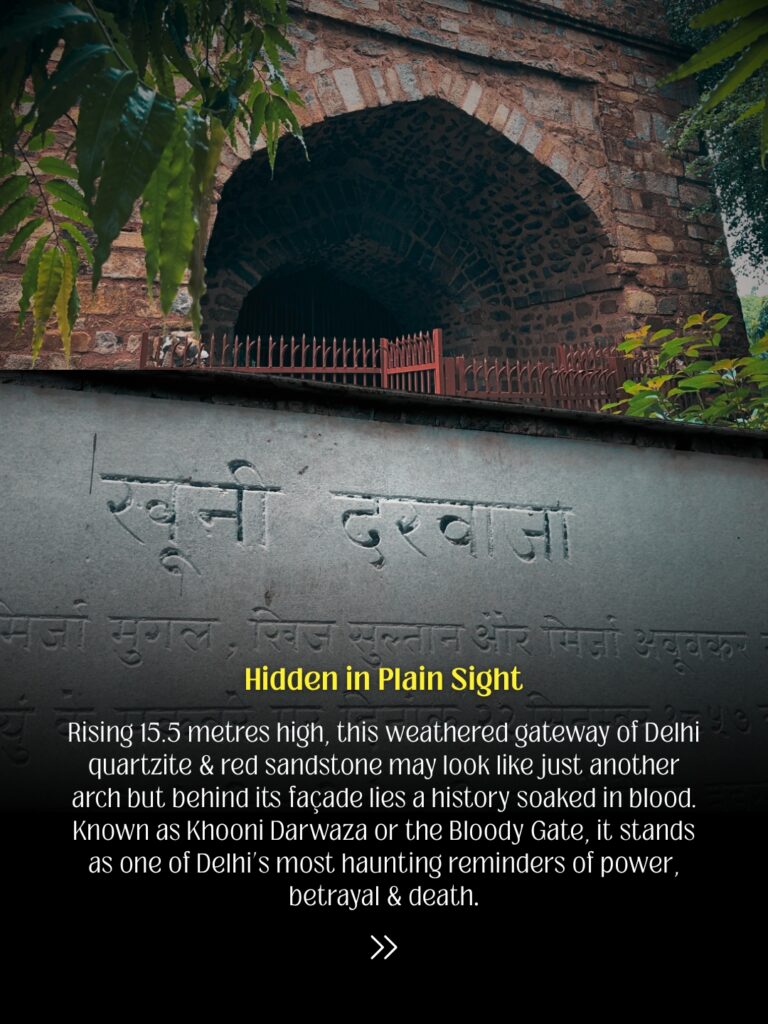
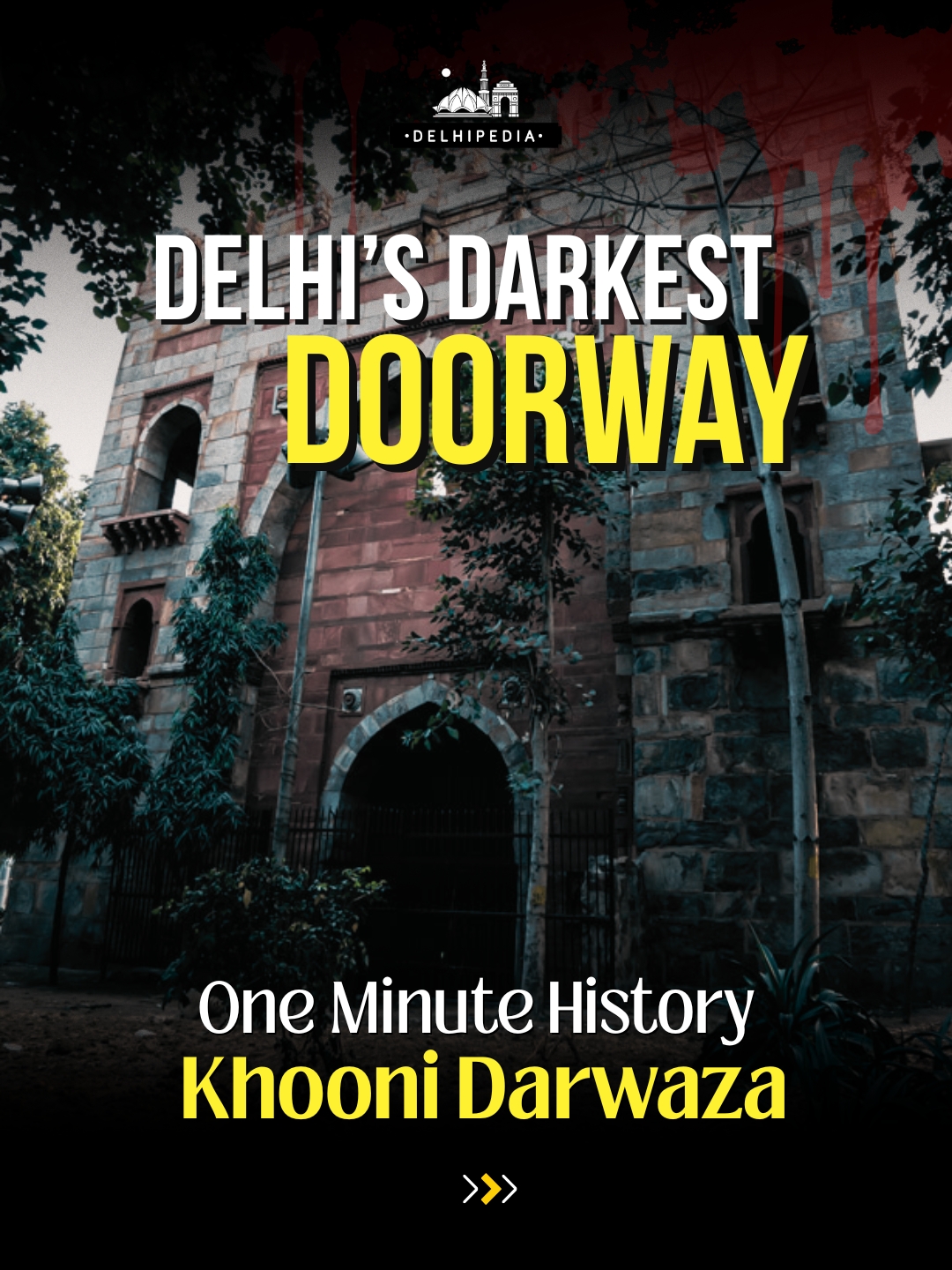
Standing 15.5 metres tall, this two-storeyed stone gateway in Delhi is one of the capital’s darkest and most overlooked monuments. Known as Khooni Darwaza — literally, the Bloody Gate — it stands just off Bahadur Shah Zafar Marg, partially obscured by trees. Crafted from Delhi quartzite with red sandstone embellishments, its grim history stretches across centuries of bloodshed, executions, and betrayal.
From Kabul to Delhi
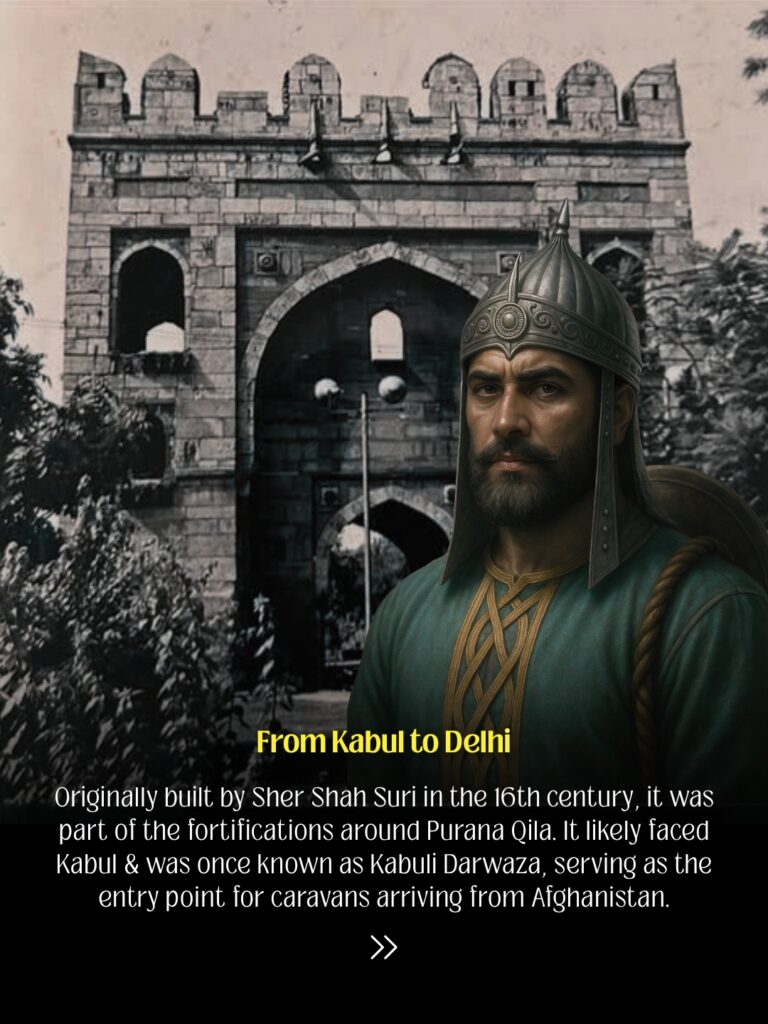
Built in the 16th century by Sher Shah Suri as part of the fortifications around Purana Qila (Old Fort), Khooni Darwaza was originally known as the Kabuli Darwaza. Its name came from the direction it faced — the city of Kabul — and it served as an entry point for caravans arriving from Afghanistan. Back then, it was one of several such gateways guarding the Mughal capital.
The Blood of Princes
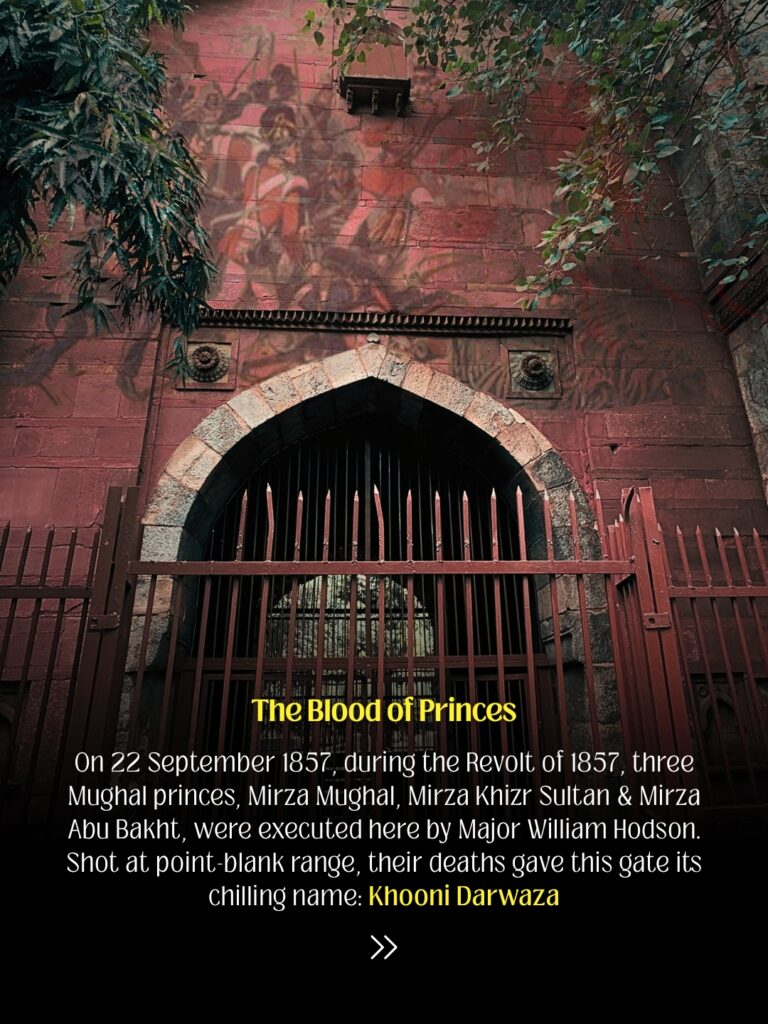
Khooni Darwaza earned its current name during the Revolt of 1857, when three Mughal princes — Mirza Mughal, Mirza Khizr Sultan, and Mirza Abu Bakht, sons and grandson of the last Mughal emperor Bahadur Shah Zafar — were executed here. On 22 September 1857, British officer Major William Hodson ordered the three men out of their cart, forced them to strip, and shot them at point-blank range under the arch. This cold-blooded act of violence marked one of the most tragic episodes in Delhi’s history and stained the monument with infamy.
A Legacy of Violence
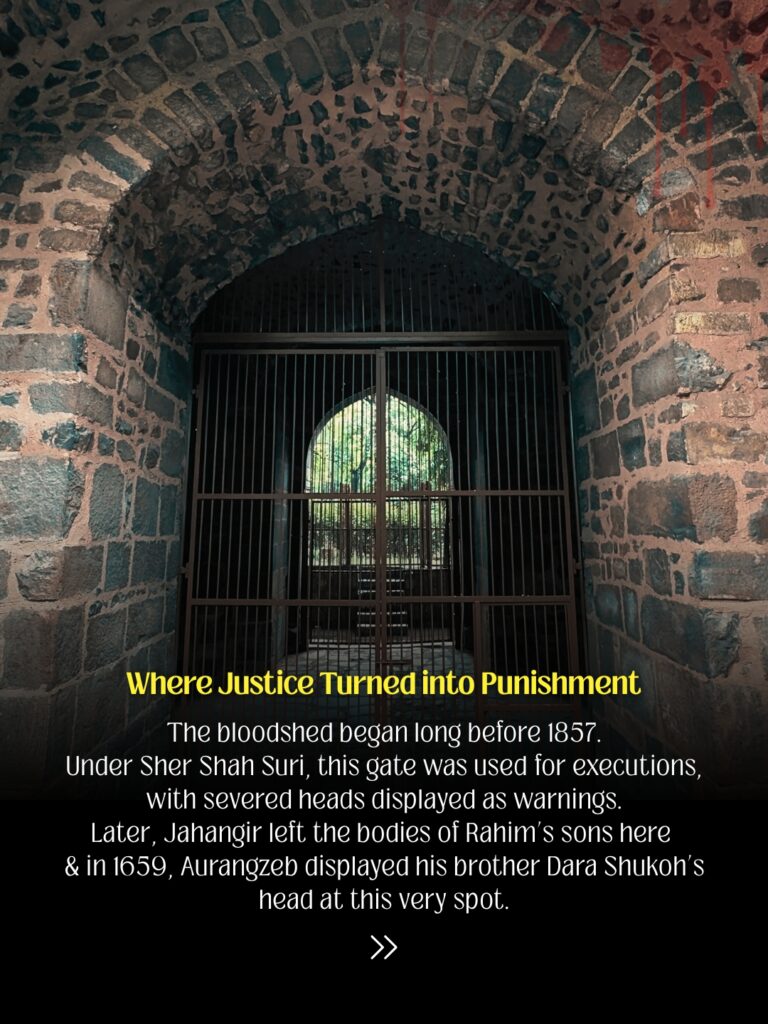
But Khooni Darwaza’s violent history predates the British era. During Sher Shah Suri’s time, it was reportedly used as a place of execution — with the heads of criminals displayed publicly as a warning. Later, Emperor Jahangir took revenge against Abdul Rahim Khan-i-Khanan by executing his sons and leaving their bodies at this very gate. In 1659, Aurangzeb followed suit by displaying the severed head of his brother Dara Shukoh here, after defeating him in a brutal war of succession.
Blood in Every Era
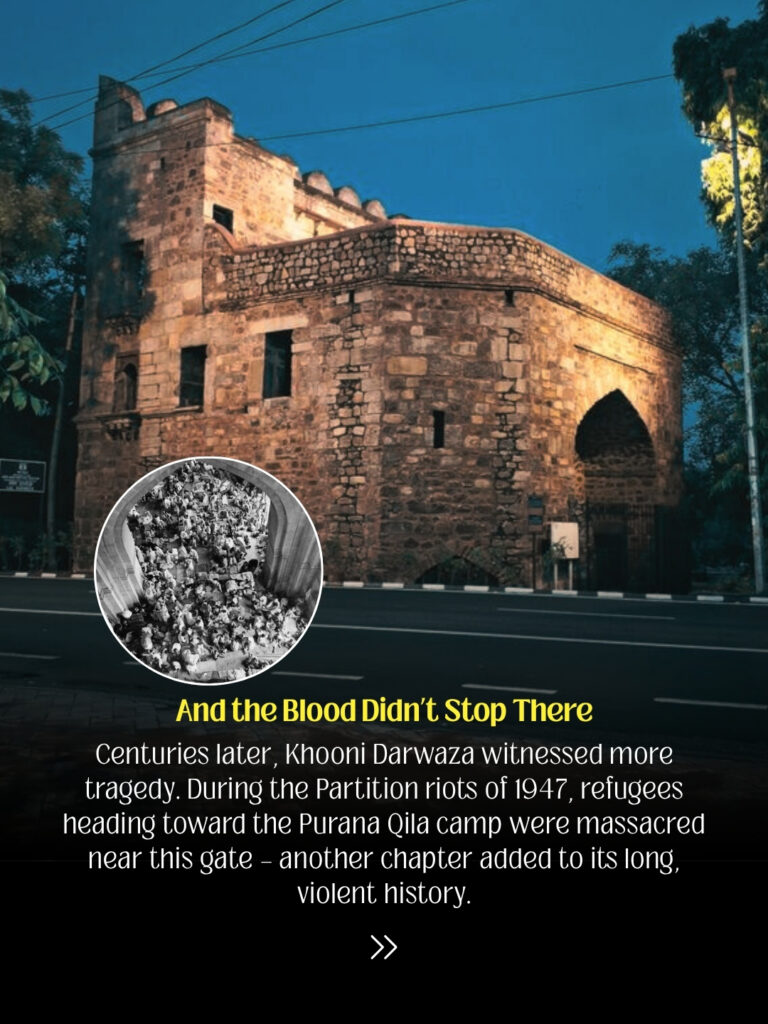
The monument’s bloody legacy did not end with the fall of the Mughals. During the Partition of India in 1947, a group of refugees en route to a camp at Purana Qila were massacred near Khooni Darwaza in yet another act of communal violence. The site’s reputation was further darkened in 2002, when a student of Maulana Azad Medical College was brutally assaulted inside the structure. Following the incident, authorities sealed off all access to its interior levels permanently.
Architecture & Atmosphere
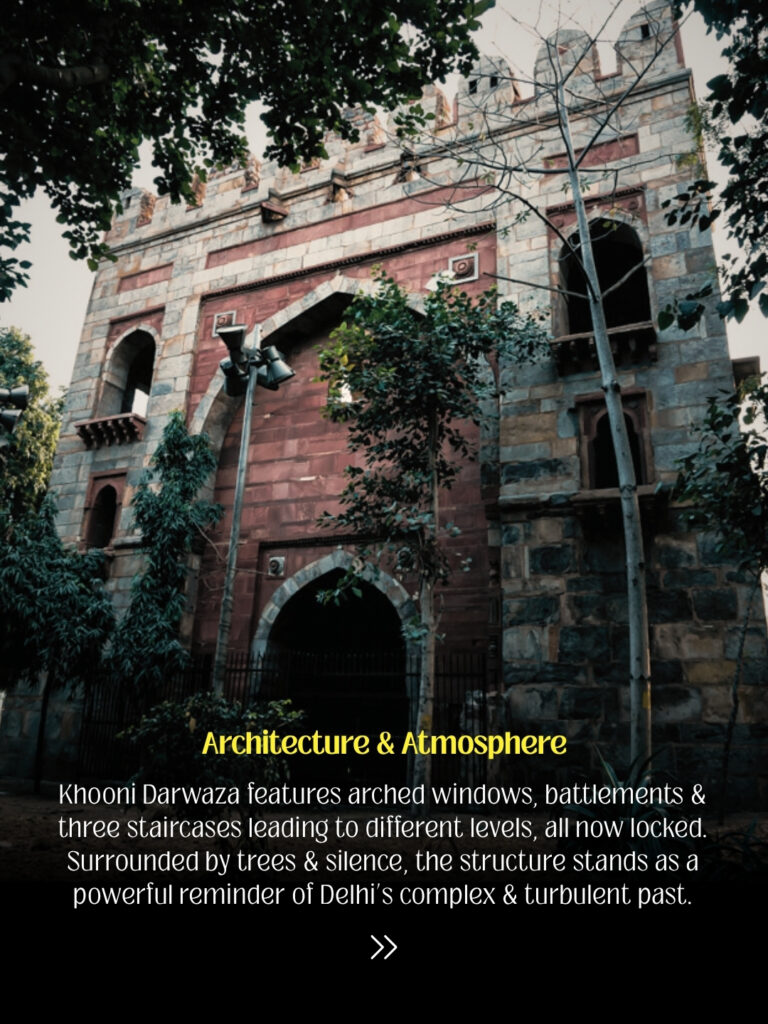
Despite its disturbing legacy, Khooni Darwaza remains architecturally impressive. The structure features two levels of arched passageways, battlements, and multiple staircases leading to different floors — all now locked. Its design blends functionality with medieval aesthetics, and the use of Delhi quartzite and red sandstone gives it a striking yet somber appearance. Shrouded by greenery and urban silence, the gate stands like a forgotten relic — its stones echoing the countless stories of Delhi’s violent transformations.
📍 Plan Your Visit
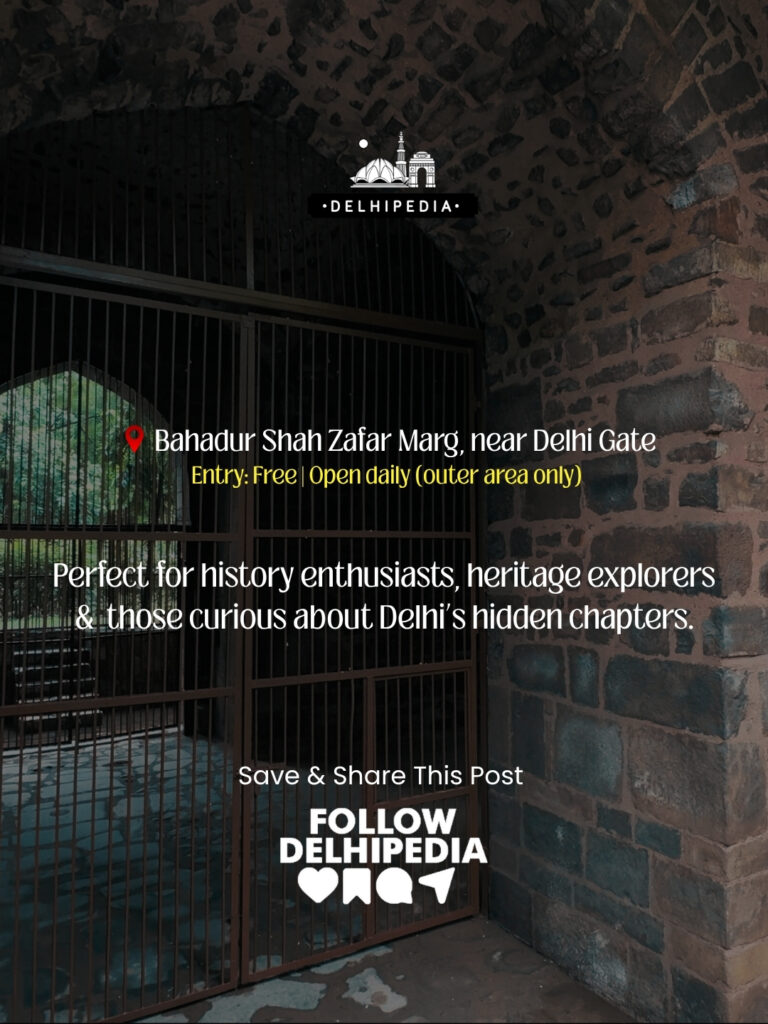
Location: Bahadur Shah Zafar Marg, near Delhi Gate Entry: Free | Timings: Open daily (outer area only) Ideal for: History buffs, heritage walkers, and those exploring Delhi’s darker side.