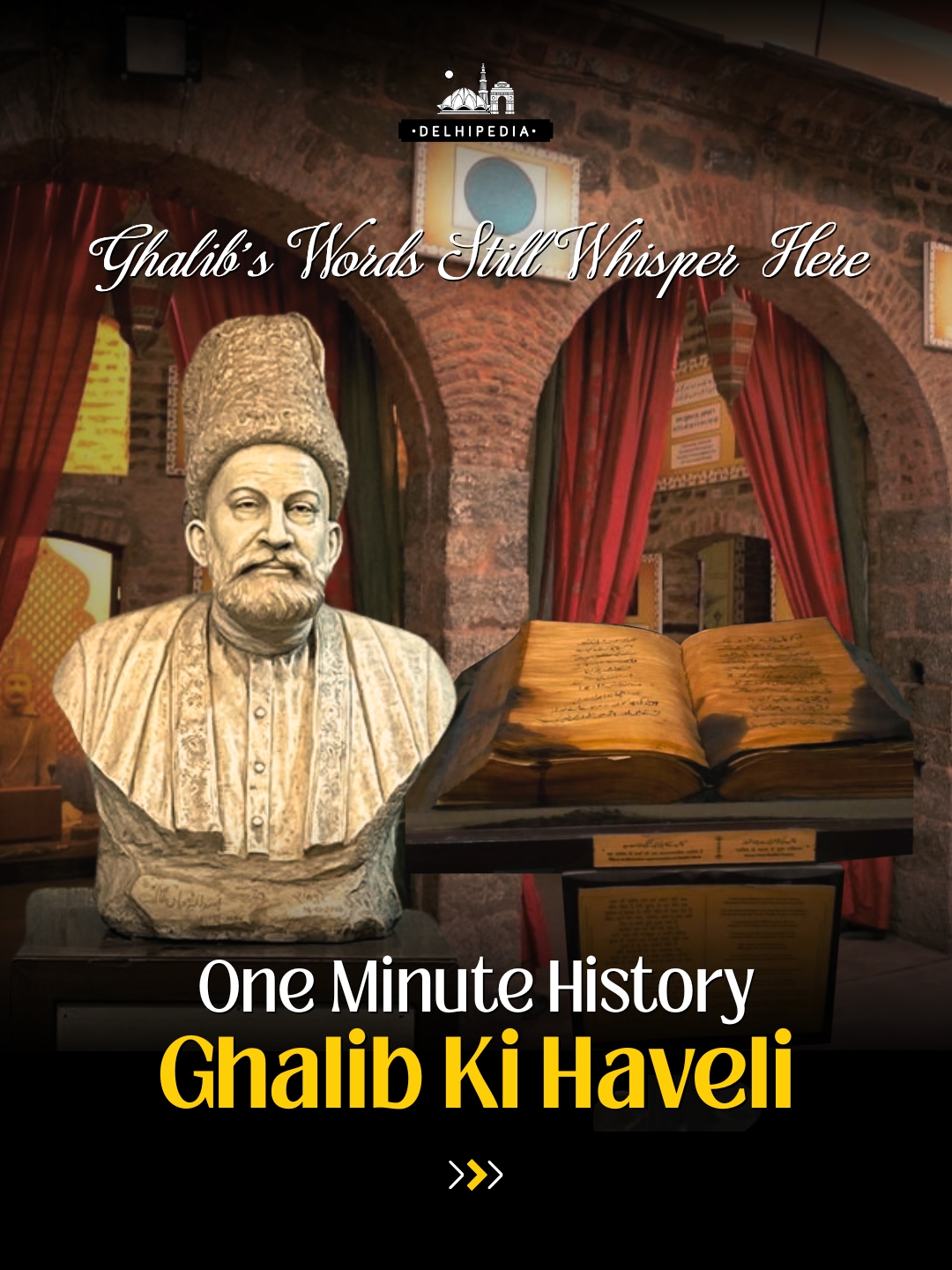
Ghalib’s Words Still Whisper Here
The Legacy Lives Here
Hidden in the winding alleys of Ballimaran, Old Delhi, stands a modest yet profound remnant of India’s literary history — Ghalib Ki Haveli. This 19th-century haveli was once the residence of Mirza Asadullah Khan Ghalib, one of the greatest poets in the Urdu language. Today, it serves as a museum dedicated to preserving his memory, writings, and lifestyle — offering visitors a window into the poetic soul of Mughal-era Delhi.
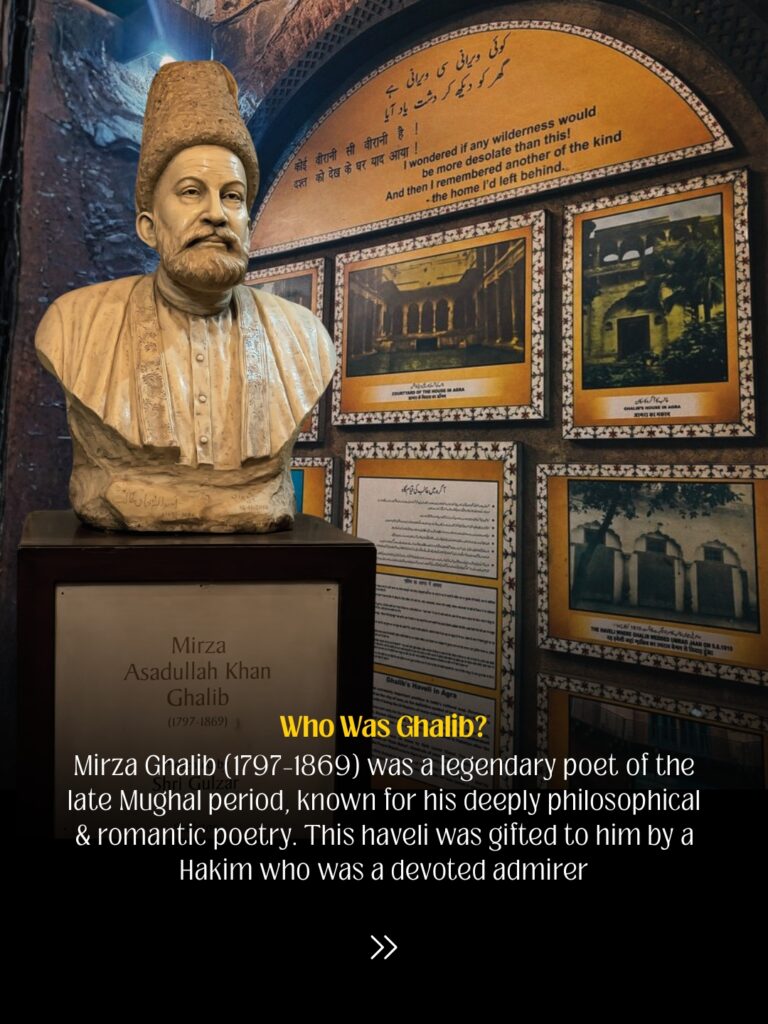
Who Was Ghalib?
Born in 1797 in Agra, Mirza Ghalib was a gifted poet who wrote in both Urdu and Persian. He lived through a time of great transition — witnessing the fall of the Mughal Empire, the 1857 Revolt, and the dawn of British colonial rule. Ghalib’s poetry is celebrated for its depth, philosophical musings, and exploration of love, loss, and existential despair. Despite personal hardships and a complex relationship with court patronage, his fame outlived him.
This haveli was gifted to him by a nobleman and physician named Hakim, who was so devoted to Ghalib’s poetry that after the poet’s death in 1869, he would sit here every evening, reportedly not allowing anyone to enter. His silent vigil turned the house into a sacred space of remembrance long before it became a formal museum.
The Haveli’s History
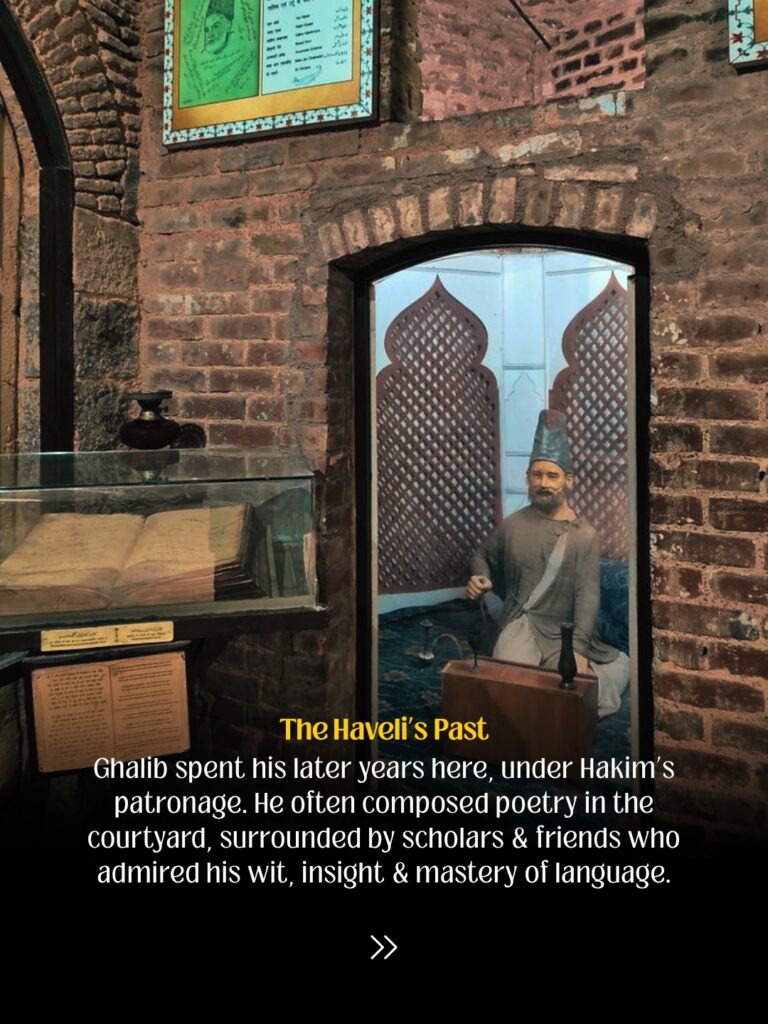
Ghalib moved into this haveli during the later years of his life, where he spent time writing, receiving guests, and discussing poetry and philosophy. Located in the heart of Shahjahanabad (now Old Delhi), the house was originally larger, but over time, much of the structure was lost or repurposed. What remains today is a portion of the original home that still retains the poetic charm of Ghalib’s era. The Delhi government restored the building and turned it into a memorial-cum-museum, now maintained by the Department of Archaeology.
The Fall of an Emperor
On 24 January 1556, after performing evening prayers, Humayun was descending the stairs of Sher Mandal when his robe got entangled in the steps. He slipped, fell, and hit his head violently.
The injury proved fatal. Humayun passed away days later, leaving the empire in the hands of a 13-year-old — Akbar the Great.
That fall inside Sher Mandal changed the course of the Mughal dynasty.
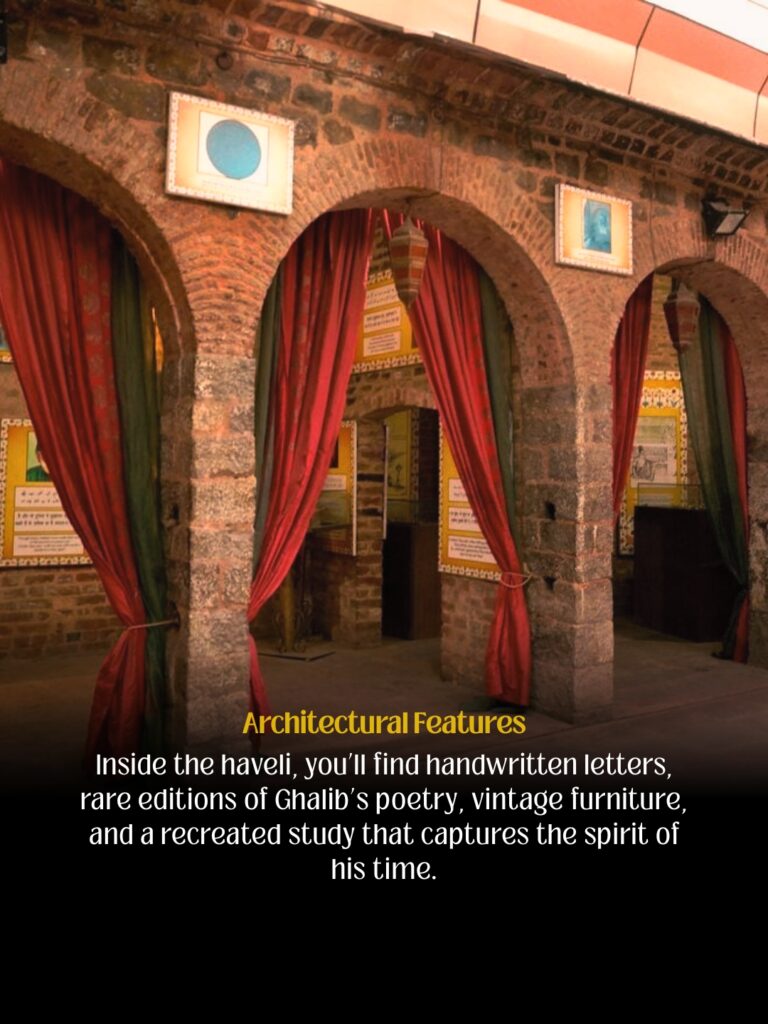
What You’ll See Inside
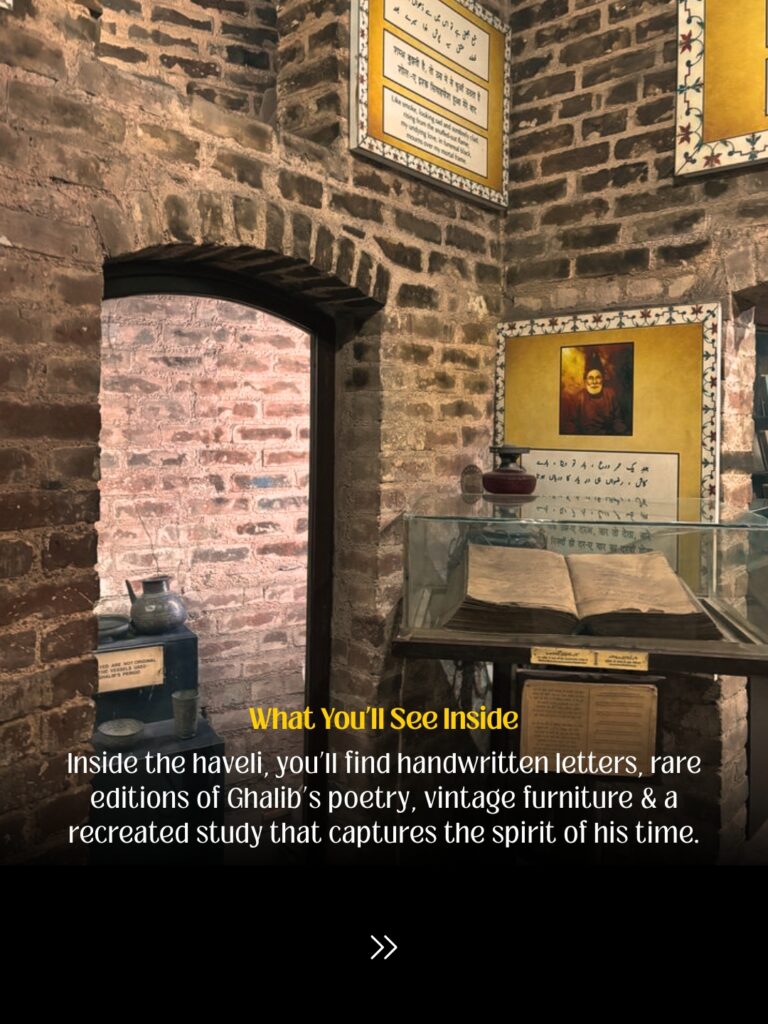
The museum displays a thoughtfully curated collection that includes:
• Handwritten letters by Ghalib in Persian and Urdu
• Rare first editions of his diwans (poetry collections)
• Paintings and portraits of Ghalib and his contemporaries
• Old-style ink pots and writing instruments
• A recreated study space that evokes the era of candle-lit nights and poetic solitude
The walls are inscribed with selected couplets, allowing you to walk through his verses as much as his home.
Plan Your Visit
Location: Gali Qasim Jan, Ballimaran, Chandni Chowk, Delhi
Entry: Free
Timings: Open daily from 10:00 AM to 6:00 PM (closed on Mondays)
Nearest Metro: Chawri Bazar (Yellow Line)
Best For:
Poetry lovers, heritage walkers, Urdu literature enthusiasts, and anyone curious about the cultural heart of Old Delhi.

Why You Should Go
Ghalib Ki Haveli is more than just a museum — it’s a quiet tribute to artistic endurance. As the noise of Ballimaran fades behind its stone walls, you enter a space where poetry breathes, history lingers, and Delhi’s literary soul quietly speaks.