
Modernist Marvels of Delhi: India Habitat Centre
Amid the tree-lined stretch of Lodhi Road stands the India Habitat Centre (IHC) — one of Delhi’s most visionary architectural projects. Conceived as a physical and intellectual ecosystem, IHC represents the idea that architecture can go beyond form and function to foster community, sustainability, and dialogue.
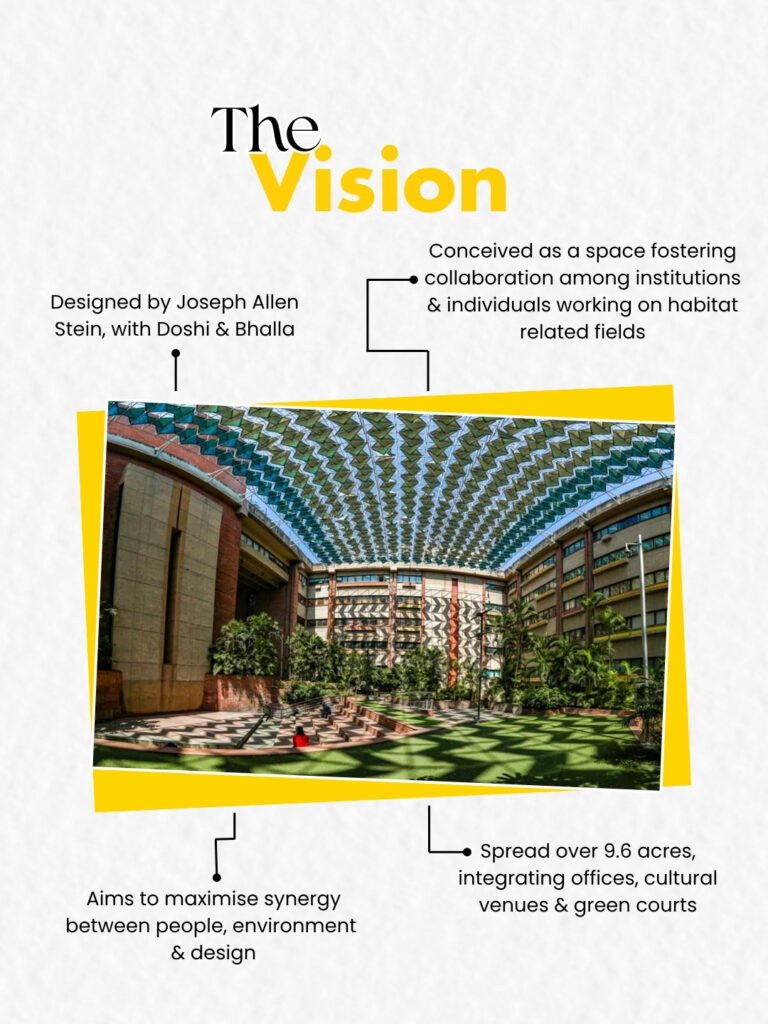
Designed by the legendary Joseph Allen Stein along with Doshi and Bhalla, IHC redefined what an urban institution could be — not just a set of buildings, but a living, breathing campus where work, art, and environment merge seamlessly.
The Vision
The idea behind IHC was to create a collaborative space for institutions and individuals working across different aspects of habitat and environment. The goal was simple yet powerful — to encourage interaction, innovation, and interdisciplinary learning through thoughtful design.
Spread across 9.6 acres, IHC brings together offices, research centres, conference venues, art galleries, libraries, and hospitality zones. The design promotes both productivity and peace — balancing the pace of urban life with a sense of openness and calm. Stein’s vision turned a dense site in central Delhi into an “urban oasis” — a model of how architecture can stimulate collaboration and well-being simultaneously.
The Campus
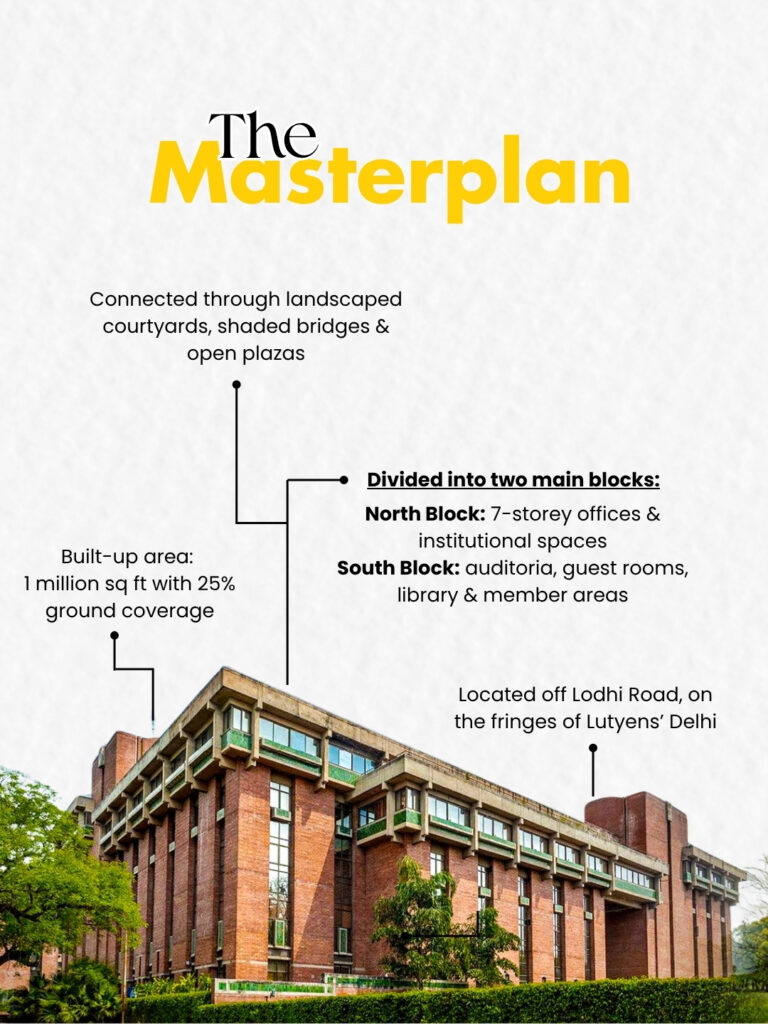
Located off Lodhi Road, on the fringes of Lutyens’ Delhi, the India Habitat Centre is a self-contained micro-city. With a built-up area of nearly one million square feet, it’s divided into two primary blocks:
-
The North Block, facing the main roads, houses seven-storey office spaces for member institutions and NGOs.
-
The South Block, oriented towards the Lodhi Housing Colony, accommodates the cultural and social components — including the auditorium, library, member facilities, guest rooms, and restaurants.
Both sections are interconnected through landscaped courtyards, shaded bridges, and open-air plazas, creating a sense of continuity and dialogue between spaces. This careful spatial organisation encourages interaction, while maintaining serenity — one of the hallmarks of Stein’s architectural philosophy.
Spaces & Facilities
The India Habitat Centre is one of the most comprehensive convention and cultural complexes in India, designed to accommodate multiple activities simultaneously.
-
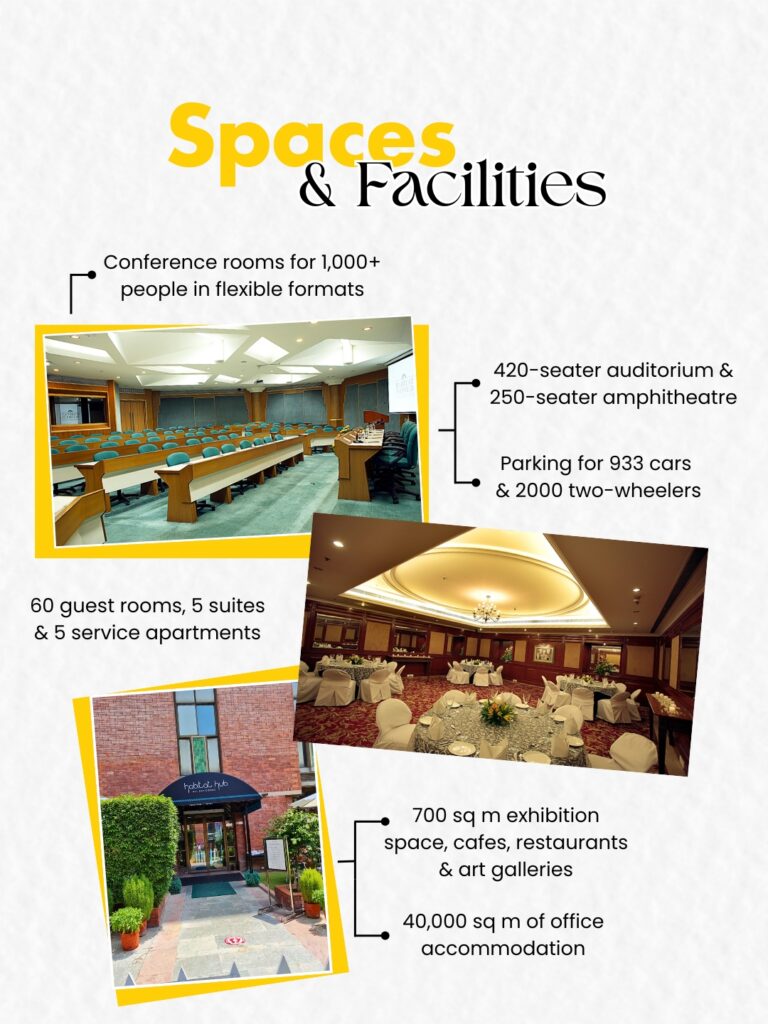
Over 40,000 sq m of office accommodation for member institutions
-
A variety of conference rooms holding 30 to 450 people, with a combined capacity of over 1,000 attendees
-
A 420-seat auditorium and a 250-seat amphitheatre for events and performances
-
700 sq m of exhibition space for art shows and installations
-
60 guest rooms, 5 suites and 5 service apartments catering to visiting delegates and artists
-
Cafeterias, fine-dining restaurants, and lounges spread across the premises
-
Parking for 933 cars and 2000 two-wheelers across double-level basements
With its blend of cultural, corporate, and social amenities, IHC functions as both a professional hub and a community space — alive throughout the day with exhibitions, discussions, and performances.
Design & Architecture
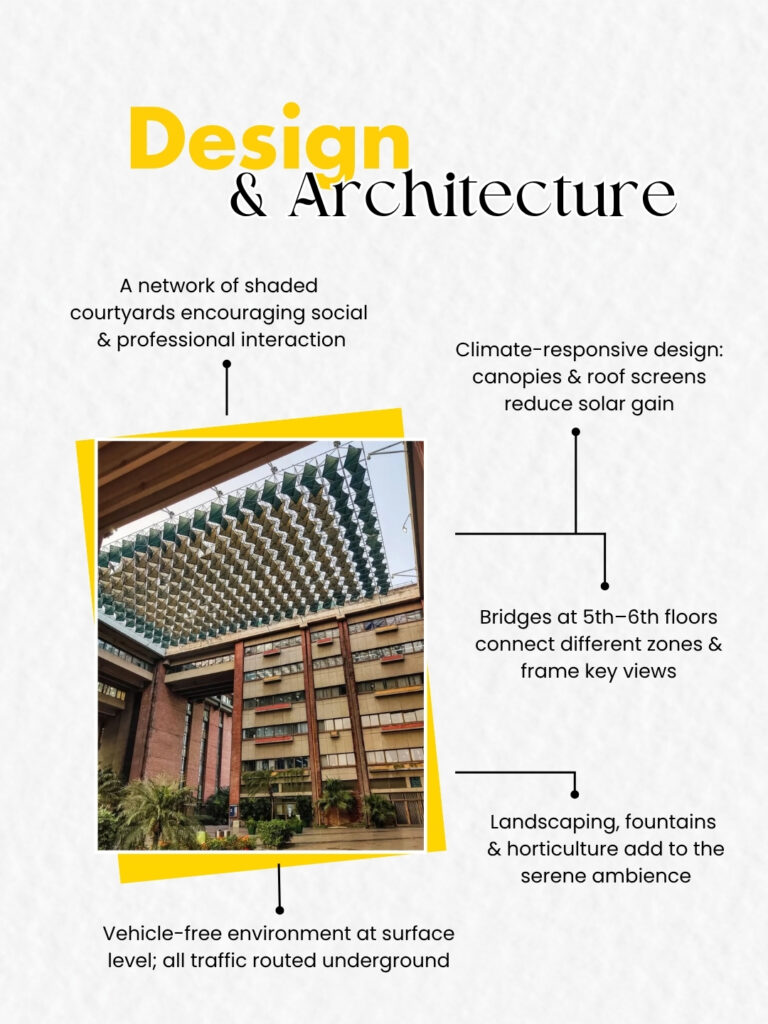
Architect Joseph Allen Stein envisioned IHC as a series of interlinked spaces that respond to Delhi’s climate while nurturing human interaction. The buildings are arranged around shaded courtyards that act as central gathering areas, offering relief from the tropical sun while encouraging spontaneous exchange.
The complex is entirely pedestrian-friendly at ground level, with all vehicular movement routed underground. Multi-level bridges connect the upper floors, framing striking vistas and guiding visitors through a rhythm of light and shadow.
Stein’s use of climate-responsive devices — such as steel-framed roof canopies and nylon-panel shading systems — reduces solar heat gain while allowing winter sunlight to filter through. The result is a comfortable microclimate that significantly reduces energy demand and creates a distinctive architectural character.
Landscaping, water features, and horticulture further enhance the environment, turning the campus into a green retreat amid the urban intensity of central Delhi.
Sustainability Initiatives
Long before sustainability became a global trend, IHC was built on ecological principles. Over the years, it has continued to evolve as one of Delhi’s most energy-efficient and environment-friendly campuses.
Key initiatives include:
-
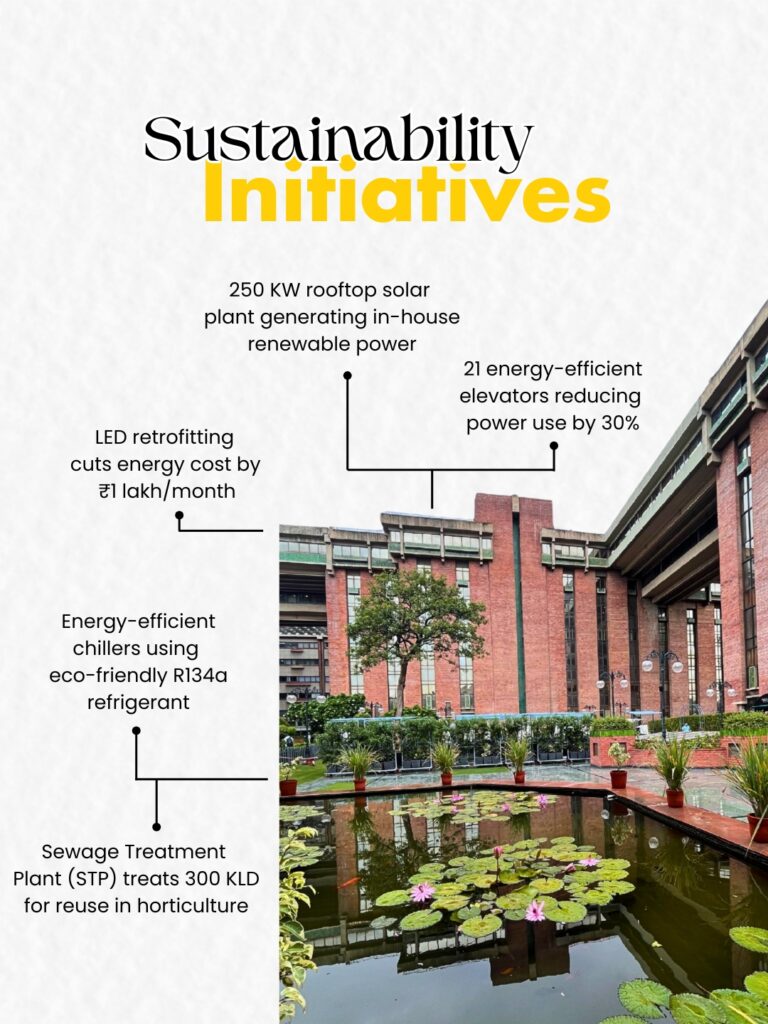
Replacement of HVAC chillers with new, energy-efficient units using eco-friendly refrigerant R134a
-
A 300 KLD Sewage Treatment Plant (STP) that recycles wastewater for horticulture and produces organic manure
-
250 KW rooftop solar panels generating renewable energy for internal use
-
Installation of LED lighting across common areas, cutting power costs by nearly ₹1 lakh per month
-
Modernisation of 21 elevators to energy-efficient Mitsubishi models, reducing consumption by up to 30%
Together, these measures have made IHC a benchmark for green architecture in India, embodying Stein’s belief that form and function must work in harmony with nature.
Why It Matters
The India Habitat Centre stands as a living example of sustainable urbanism, combining design excellence with ecological responsibility. It is not only one of Delhi’s most respected cultural and professional spaces but also a blueprint for how Indian cities can evolve — intelligently, inclusively, and sustainably.
Through its courtyards, bridges, and shaded walkways, IHC continues to inspire generations of architects, planners, and citizens who believe that the future of cities lies in spaces that connect people, purpose, and planet.
📍 Location: Lodhi Road, New Delhi