
Modernist Marvels of Delhi: British Council Building
When it comes to Delhi’s skyline, Connaught Place is often associated with colonial-era colonnades. But nestled within its bustling lanes is one of Delhi’s most fascinating modernist structures — the British Council Building. Designed by some of the greatest names in architecture, engineering, and art, this landmark is more than just a functional office; it is a cultural heirloom that symbolises history, collaboration, and sustainability.
The Collaboration
The British Council Building is the result of a unique partnership between three legends: Charles Correa (architect), Mahendra Raj (structural engineer), and Howard Hodgkin (artist). Together, they created a space that not only houses the British Council’s India headquarters but also integrates a library, art gallery, auditorium, and offices.
Rather than being a simple institutional building, it was envisioned as an heirloom that represented the deep, and often complex, relationship between India and Britain. The collaboration itself set the tone for what this structure would become — a masterpiece at the crossroads of design, culture, and diplomacy.

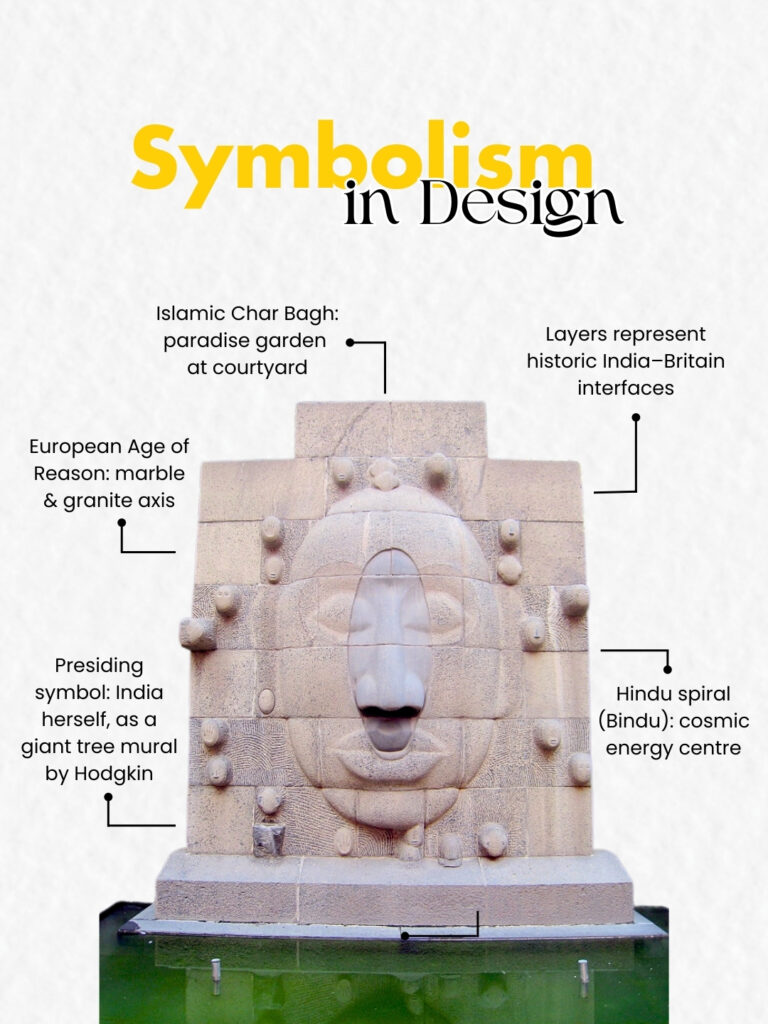
Symbolism in Design
Charles Correa layered the building with multiple levels of symbolism, drawing from India’s rich cultural traditions as well as Europe’s intellectual history.
-
At one end stands a spiral motif, representing the Hindu concept of the Bindu — the energy centre of the cosmos.
-
At the heart of the building is an Islamic Char Bagh, the traditional garden of paradise, integrated into the courtyard.
-
Moving along the axis, a European marble-and-granite installation represents the Age of Reason, symbolising progress and science.
-
Presiding over all is India herself, symbolised through Hodgkin’s monumental tree mural executed in black Kadappa stone and white Makrana marble.
This intricate layering of references created a building that is at once universal and deeply local, bridging cultures in both form and meaning.
Restoration & Modernisation
Over time, the building needed to adapt to contemporary demands. The restoration was carried out by Morphogenesis, a design firm known for its sensitive and sustainable approach. Founder Sonali Rastogi explained that the Council wanted to retain the original structure while introducing modern work concepts such as hot-desking, co-working spaces, and flexible layouts.
Instead of breaking and remaking, the team carefully revitalised the interiors to accommodate digitised research, collaborative workspaces, and contemporary office systems. This balance of respecting heritage while meeting modern needs has allowed the British Council Building to remain relevant without losing its architectural soul.

Sustainability First
The renovation also placed a strong emphasis on sustainability. Spread across 72,000 square feet, the redesigned building achieved impressive eco-friendly benchmarks:
-
44.5% reduction in lighting energy consumption
-
44% lower water usage through efficient fixtures
-
94% diversion of waste from landfills during renovation
-
29.1% recycled content used in building materials
These measures earned the building the prestigious USGBC LEED Platinum certification, making it the first British Council worldwide to achieve this standard under the Commercial Interiors category. The result is not just a heritage restoration, but a future-ready model of sustainable design.

Culture & Community
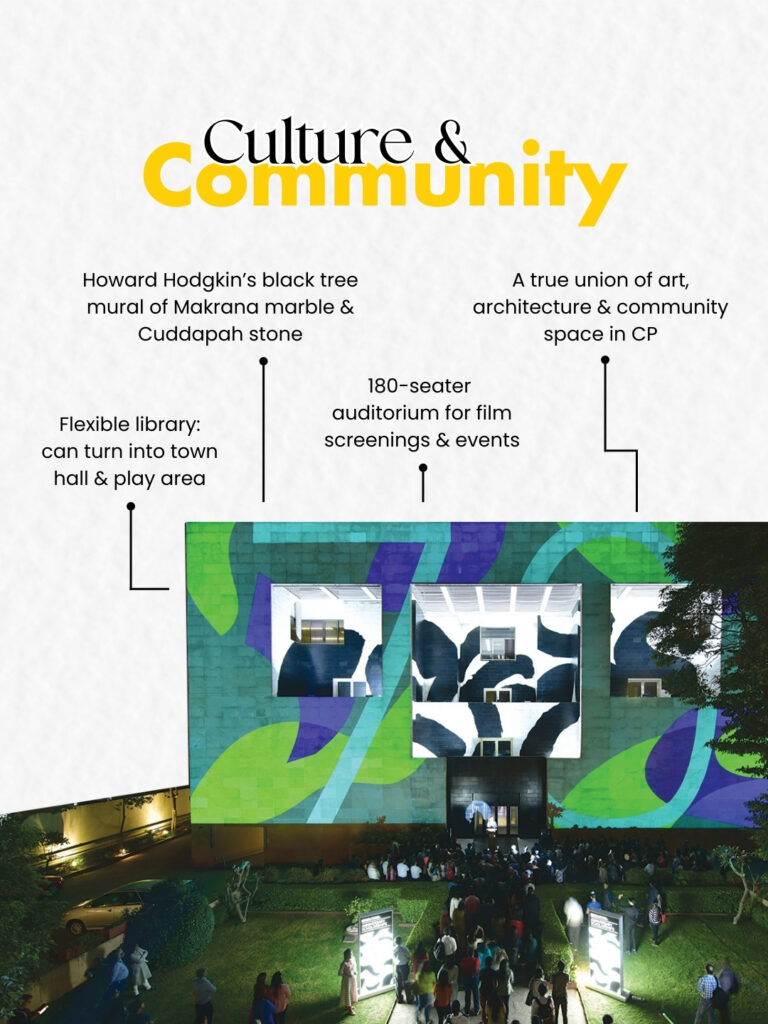
Beyond its architectural and environmental achievements, the British Council Building continues to serve as a hub of cultural exchange in Delhi. The 180-seater auditorium, redesigned in stark charcoal tones, provides a world-class setting for film screenings, talks, and performances.
The library has also been reimagined as a multi-functional space that can transform into a town hall or even a play area, making it more participative and community-focused. Hodgkin’s iconic tree mural still dominates the façade, acting as a symbol of life, knowledge, and continuity — a reminder that this building is not just about design but about relationships and cultural dialogue.
Why It Matters
The British Council Building stands out as one of Delhi’s most important modernist landmarks. It represents the rare coming together of architecture, engineering, and art, while also reflecting centuries of India–Britain interaction. By adapting itself to contemporary needs without erasing its history, it proves how heritage structures can evolve sustainably and remain relevant for generations.
📍 Location: Connaught Place, New Delhi