
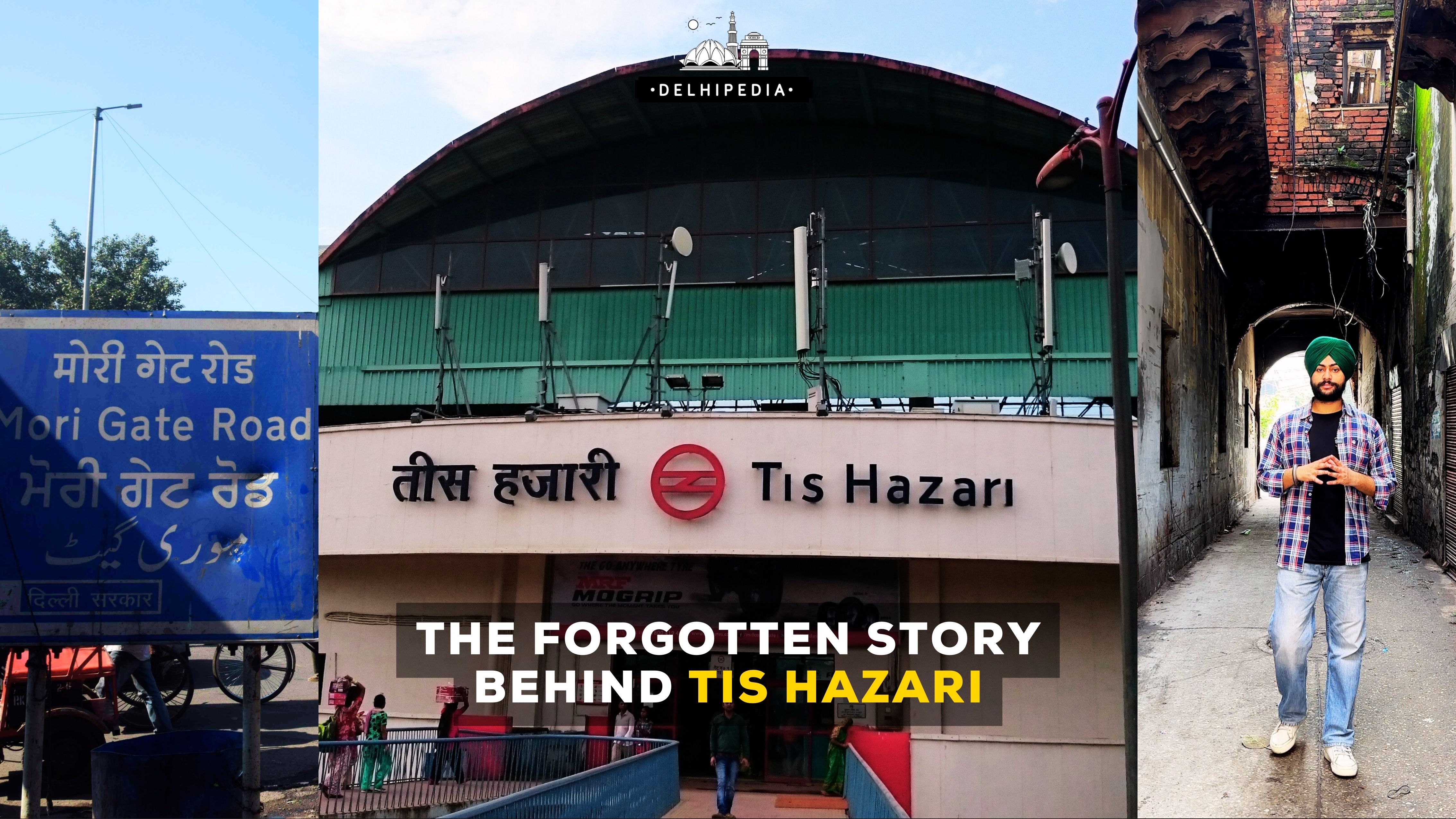
The Forgotten Story Behind Tis Hazari, Mori Gate and Pul Mithai
Delhi’s neighbourhoods are not just places – they are living history. Every name carries a story of conquests, resilience, and culture. One such story is that of Tis Hazari, Mori Gate, and Pul Mithai — three places whose names take us back to 1783.
Why Is It Called Tis Hazari?
In 1783, Baba Baghel Singh led 40,000 Sikh horsemen into Delhi with the mission to establish Sikh authority. The army was divided into three groups — 5,000 were stationed at Majnu ka Tila, another 5,000 at Ajmeri Gate, while the largest contingent of 30,000 camped in the open grounds near today’s court complex.
From this massive camp of thirty thousand, the area came to be known as Tis Hazari (Tis meaning thirty in Persian).
The Secret of Mori Gate
Conquering Delhi was not easy. At the time, Mughal Emperor Shah Alam II had shut the city gates and fortified the walls. Delhi stood like a fortress, resisting entry.
It was only when a royal mason revealed a weak spot that the Sikhs found a way in. A small opening, or mori (hole), was used by the warriors to enter the city. This breach in the wall gave the area its lasting name — Mori Gate.
The Sweet Origins of Pul Mithai
After their victory, the Sikhs received a tribute of three lakh rupees. With this wealth, they built historic gurdwaras in Delhi and celebrated by distributing sweets among the local population. The site of these celebrations became associated with sweets (mithai) and came to be called Pul Mithai.
The Gurdwaras Built After the Victory
As a mark of faith and gratitude, the Sikhs established several gurdwaras in Delhi using the tribute they received. These gurdwaras stand today as reminders of the Sikh presence in the capital and their role in shaping Delhi’s cultural and spiritual landscape.
Delhi’s Names as Windows to the Past
The names Tis Hazari, Mori Gate, and Pul Mithai are not random labels — they are reminders of a chapter when Sikh warriors left their imprint on Delhi’s history. Next time you pass through these areas, remember that the streets are echoes of a 200-year-old story.