

A Royal Secret Resurfaces in Delhi
Tucked deep inside Shalimar Bagh, in northwest Delhi, lies one of the city’s most forgotten yet significant Mughal-era monuments—Sheesh Mahal. After nearly 370 years, this 17th-century palace has finally reopened to the public, thanks to a landmark conservation effort by the Delhi Development Authority (DDA).
More than just a historic site, Sheesh Mahal is a living reminder of the Mughal Empire’s grandeur, intrigue, and fading legacy.
The Forgotten Glory of Sheesh Mahal
Built in 1653 during the reign of Emperor Shah Jahan, Sheesh Mahal (translated as Palace of Mirrors) was part of a sprawling garden complex initially called Aizzabad Bagh. It was commissioned under the guidance of Akbarabadi Begum, one of Shah Jahan’s wives, and was designed as a royal retreat—a quiet escape from the political and military heart of Shahjahanabad (Old Delhi).
The palace and its surrounding gardens were celebrated for their reflective interiors, intricate carvings, flowing water channels, and floral motifs. It embodied the classical Mughal concept of paradise—symmetry, water, greenery, and serenity.
But the site’s historical importance reached its peak in 1658, when Aurangzeb, Shah Jahan’s son, chose Sheesh Mahal as the location for his secret coronation. On 31st July, in the quiet of this royal retreat, he officially ascended the throne of Hindustan—away from the turbulence of Delhi’s Red Fort, amid rising tensions with his brothers during the Mughal war of succession.
Aurangzeb’s Quiet Coronation at Shalimar Bagh
In the turbulent Mughal war of succession, Aurangzeb, Shah Jahan’s third son, emerged victorious after defeating his brother Dara Shikoh. But instead of marching into the Red Fort like previous emperors, Aurangzeb made a bold—and telling—decision.
According to historian Khafi Khan, in his 18th-century chronicle Muntakhab-ul Lubab, Aurangzeb deliberately avoided entering the Delhi fortress. Instead, he set up camp in the serene grounds of Aizzabad Bagh (now Shalimar Bagh).
“Aurangzeb, not caring to enter the fortress of Delhi, encamped in the garden of Aizzabad… On Friday, the first of Zulqada (31 July 1658), after saying his prayers, and at an auspicious time, he took his seat on the throne of the empire of Hindustan.”
He postponed all royal formalities like issuing coins or sending gifts to foreign rulers. This moment—his first accession—was held in Sheesh Mahal, quietly and purposefully. The choice reflected both his desire for strategic calm and his distrust of imperial pomp.
The palace thus became the stage for a silent coup of power, set not in marble halls, but under trees and sky.
Why Did Sheesh Mahal Close Down?
Despite its royal origins, Sheesh Mahal began to fade from memory by the 18th century. With the decline of the Mughal Empire and the shifting of political power, Shalimar Bagh lost its prominence, and the palace fell into disuse.
Over centuries, it faced:
-
Neglect during colonial rule
-
Encroachment and urban development in surrounding areas
-
Lack of maintenance, which led to the deterioration of its walls, arches, and underground water systems
By the mid-20th century, the structure was heavily damaged, partially buried under vegetation, and largely inaccessible to the public. The mirrors were long gone, and only fragments of floral engravings and lakhori brickwork remained. For decades, it remained closed off due to safety concerns and ongoing degradation.
A Restoration Rooted in Authenticity
The recent revival of Sheesh Mahal is one of the most authentic heritage restoration projects undertaken in Delhi.
The DDA’s conservation team, in collaboration with traditional artisans and historians, undertook the delicate process of rebuilding the monument using original Mughal-era materials and techniques, such as:
-
Lime surkhi (lime mortar mixed with crushed bricks)
-
Lakhauri bricks—thin bricks used widely during the Mughal period
-
Natural binders like jaggery (gud), bael fruit pulp (belgiri), and urad dal paste
This commitment to historical accuracy ensured the spirit of the original architecture was preserved—not just in appearance, but in essence.
More Than a Monument: A Cultural Space Reimagined
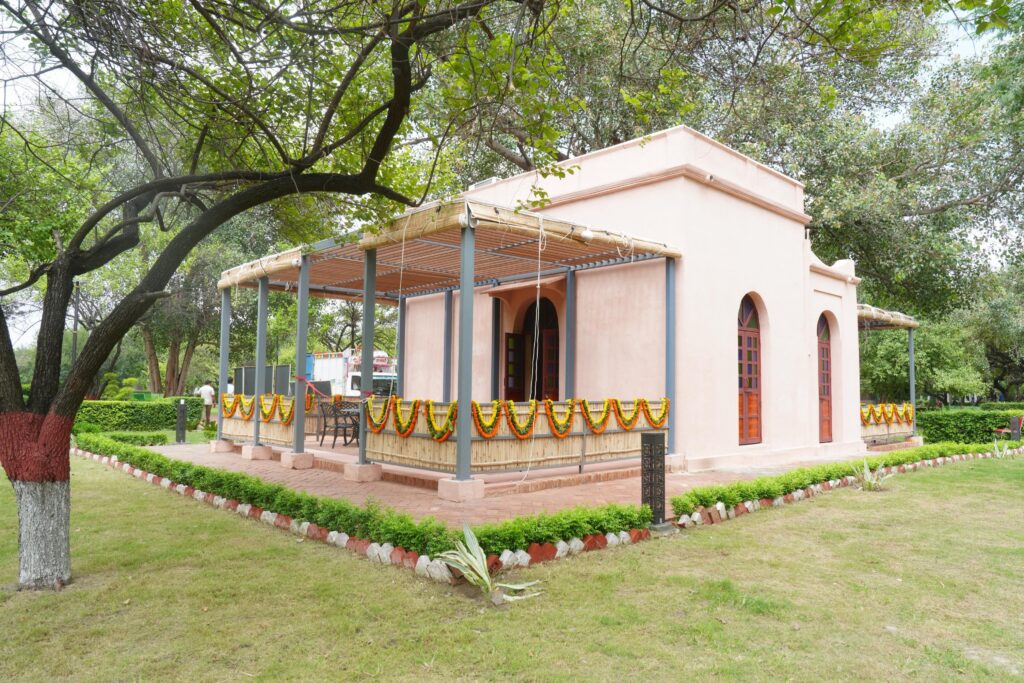
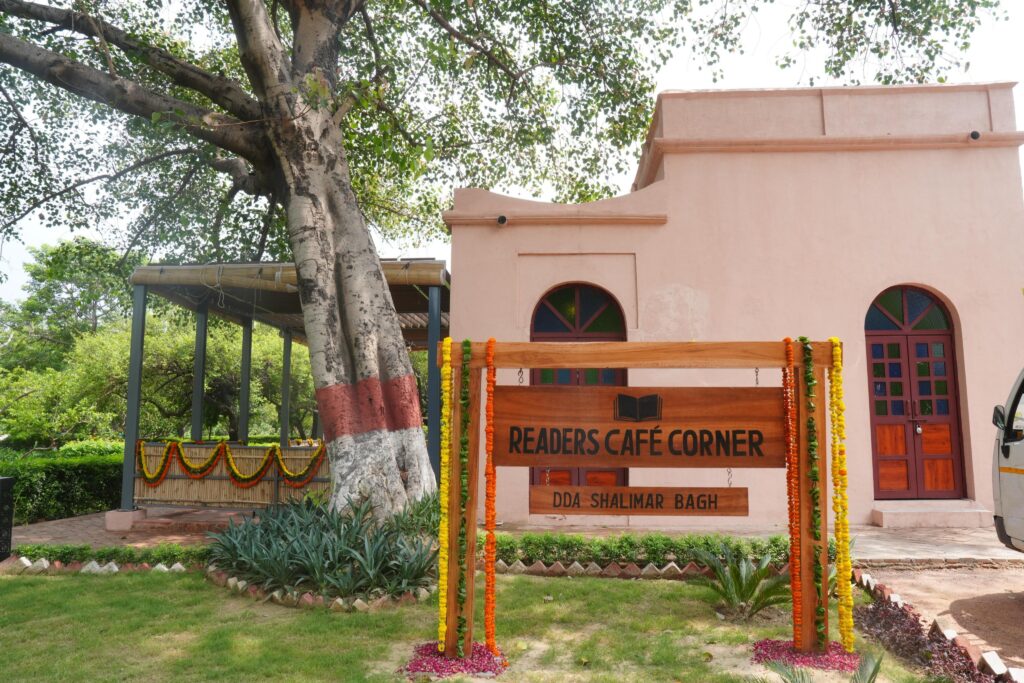
The restoration extended beyond the palace walls. The DDA also revived a baradari (Mughal pavilion) and three heritage cottages located within the garden complex.
In a refreshing twist, two of these cottages have been repurposed as public spaces:
-
🕮 The Readers’ Café Corner – A quiet literary nook for book lovers, students, and culture seekers
-
☕ Café Shalimar – A casual eatery that offers refreshments to heritage tourists and park visitors alike
This blend of preservation and community use makes Sheesh Mahal one of the few heritage sites in Delhi that serves both memory and modern utility.
Why You Should Visit Sheesh Mahal Today
Whether you’re a history enthusiast, architecture lover, or just looking for an offbeat afternoon plan—Sheesh Mahal offers a unique escape from the usual city noise.
Here’s why it’s worth exploring:
-
Experience the site of Aurangzeb’s secret coronation
-
Walk through Mughal architecture authentically restored
-
Unwind at two peaceful cafés nestled inside heritage cottages
-
Discover a lesser-known chapter of Delhi’s layered history
Plan Your Visit
📍 Location: Shalimar Bagh, North West Delhi
🕰️ Timings: 9:00 AM – 6:00 PM (closed on Mondays)
💸 Entry: Free of cost
📸 Tip: Best visited in the early morning or just before sunset for the perfect lighting