

Tughlaqabad Fort: The City That Was Cursed Before It Was Born
The Cursed Capital That Never Lived
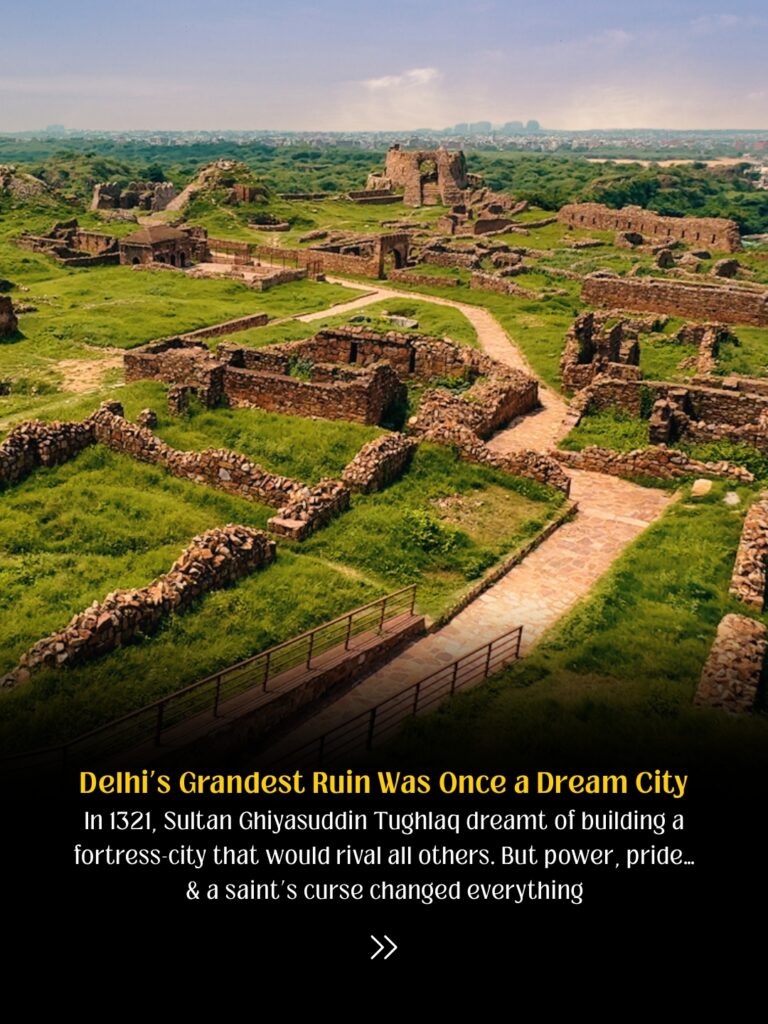
In the dusty southern edge of Delhi stands a city of broken dreams — Tughlaqabad Fort, a 14th-century marvel that was meant to be the strongest capital of its time. Today, it’s a haunting maze of crumbling walls, echoing legends, and a saint’s curse that may have come true.
A Fortress Built by Force
In 1321, Ghiyasuddin Tughlaq, the founder of the Tughlaq dynasty, became Sultan of Delhi. Determined to prove his strength and authority, he ordered the construction of a new capital — Tughlaqabad — a fortress-city meant to dwarf everything else.
With 25-metre-high walls, 52 massive gates, watchtowers, rainwater tanks, secret passages, and royal chambers, the fort was designed to be self-sustaining and impenetrable. But building such an ambitious city came at a cost.
To complete the fort quickly, Ghiyasuddin issued a decree: all available workers across Delhi Sultanate must work on Tughlaqabad — leaving no labourers for other projects.
The Saint’s Curse
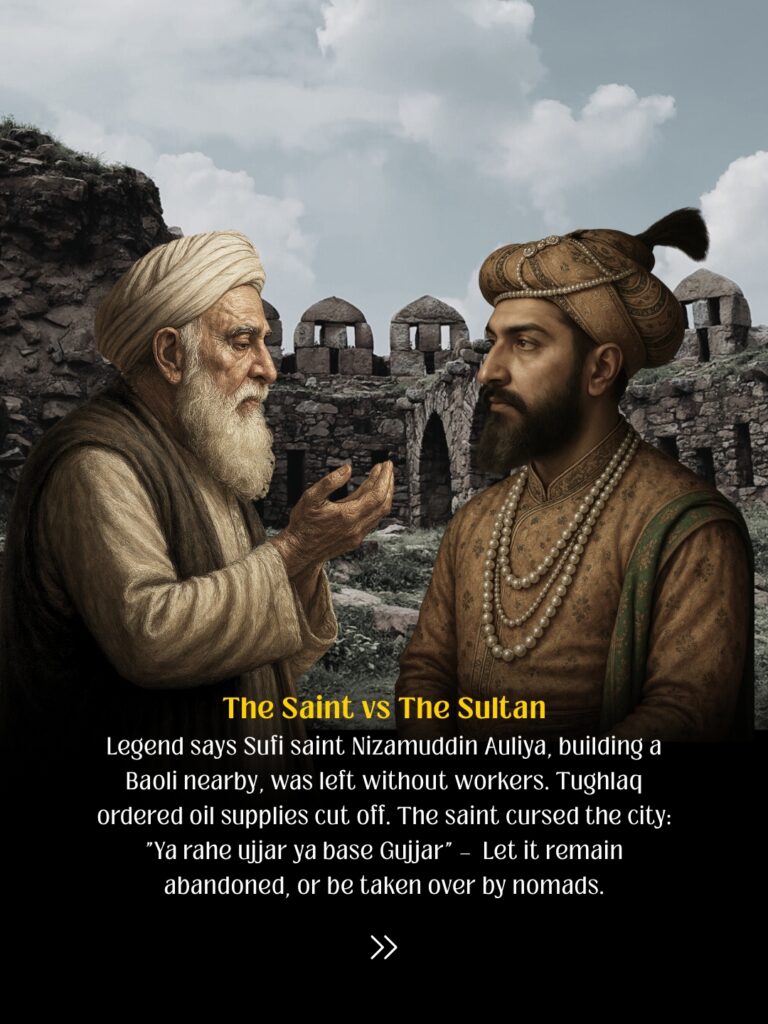
At the same time, revered Sufi saint Nizamuddin Auliya was building a baoli (stepwell) for the people. With workers redirected to the fort, his project stalled. Furious, Tughlaq even cut off oil supplies so work couldn’t continue at night.
But the saint responded not with retaliation — but with words.
He is believed to have uttered two legendary lines:
-
“Ya rahe ujjar, ya base Gujjar”
(Let the city remain deserted, or be overrun by nomads.) -
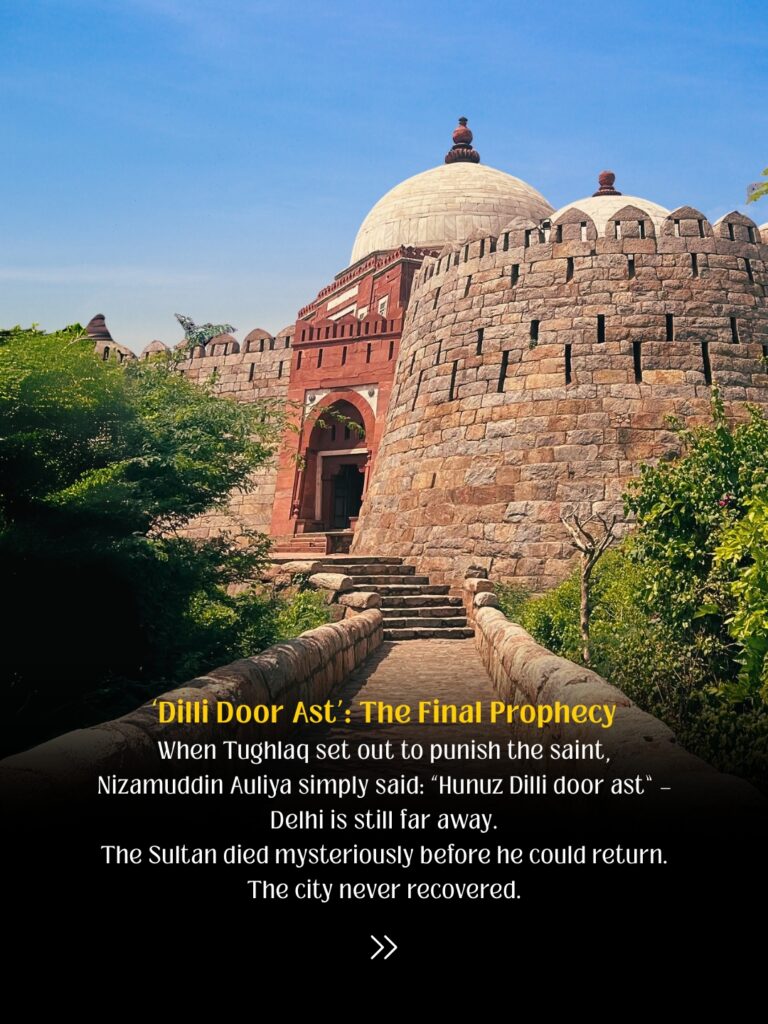
“Hunuz Dilli dur ast”
(Delhi is still far off.) — said when Tughlaq swore revenge on the saint while returning from Bengal.
As fate would have it, Ghiyasuddin died on that return journey — reportedly crushed by a pavilion built in his honour. The city never flourished. The curse, some say, had done its work.
A City of Silence
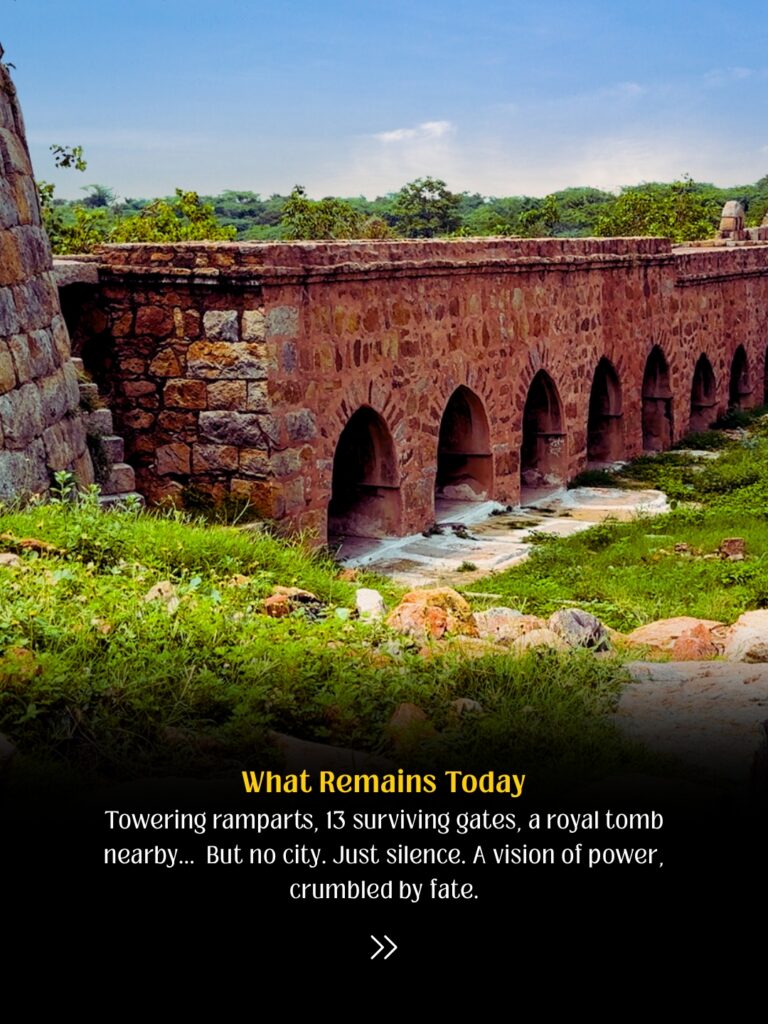
Despite its grand beginnings, Tughlaqabad was abandoned shortly after completion. Over time, it fell into ruin. Only 13 of the original 52 gates remain. Circular towers, royal chambers, and tombs lie scattered across uneven terrain.
Nearby lies the striking red sandstone mausoleum believed to house Ghiyasuddin Tughlaq, his wife, and his successor, Mohammad bin Tughlaq — a final resting place for rulers whose dreams outpaced reality.
Plan Your Visit
Location: Tughlaqabad Fort, Mehrauli-Badarpur Road, New Delhi
Entry Fee: ₹20 (Indians) | ₹250 (Foreigners)
Timings: Sunrise to Sunset
Best Time: Early morning or late afternoon for soft light and fewer crowds
Pair your visit with Ghiyasuddin’s Tomb across the road, or a heritage walk through nearby Mehrauli.

Why Visit Tughlaqabad Fort?
It’s not just a ruin. It’s a warning.
A reminder that power built without people never lasts, and that even kings must respect saints.
Whether you’re a history enthusiast, photographer, or just someone chasing Delhi’s forgotten stories — Tughlaqabad will leave you humbled.