

Uncovering Chor Minar: A Window into Alauddin Khilji’s Rule
A Tower of Skulls in South Delhi?
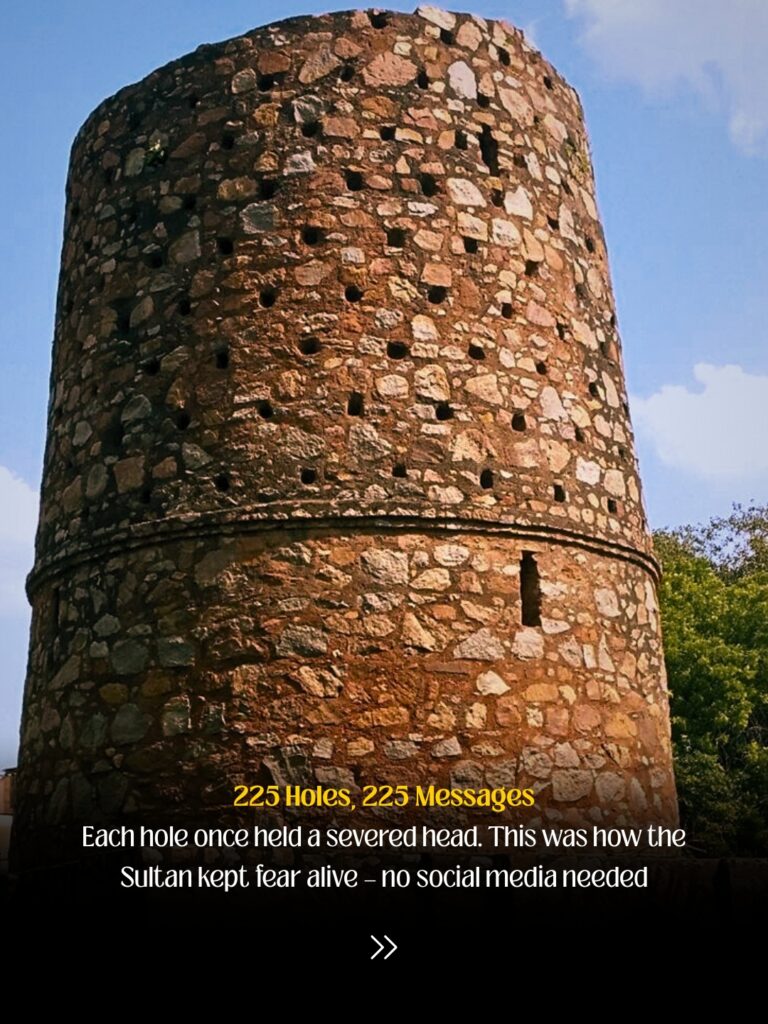
Tucked away in the quiet lanes of Hauz Khas, surrounded by leafy parks and modern cafés, stands one of Delhi’s most spine-chilling monuments — Chor Minar, also known as the “Tower of Thieves.” At first glance, it may seem like just another ruin from the Sultanate era. But a closer look — especially at the 225 holes carved into its circular structure — reveals a much darker history.
Built for Blood: A Sultan’s Warning
Chor Minar was built in the 13th century during the reign of Sultan Alauddin Khilji, one of Delhi’s most powerful and ruthless rulers. While Khilji is often remembered for his military campaigns and administrative reforms, he was also known for his brutal crackdown on crime and dissent.
According to local legends and historical accounts, the 225 holes on the surface of Chor Minar were used to impale the severed heads of thieves, rebels, and enemies of the state. These heads were placed on display as a warning — a gruesome form of public punishment meant to instill fear among citizens and invaders alike.

Architecture with a Message
The tower is about 12 meters high and built from typical Sultanate-era stone masonry. Its cylindrical structure, punctuated with symmetrical holes, was never meant to be aesthetic — it was designed for intimidation. Scholars believe it may have also served as a lookout post or part of a larger complex, though most of the adjoining structures have disappeared over time.
What makes Chor Minar truly unique is its singular function: punishment as propaganda. Long before social media or newspapers, Khilji used architecture to spread a message — break the law, and your head might decorate this tower.
The Legend Lives On
Today, Chor Minar stands silently amidst urban gardens and traffic. Locals visit it for evening walks, and few truly grasp the grim story it holds. Some even claim to feel an eerie stillness near the site, especially at dusk — though no paranormal activity has ever been confirmed.
While there are no official records confirming the exact number of executions, the legend of Chor Minar has passed through centuries as a tale of how Delhi once enforced justice — with a blade and a brutal sense of order.

📍 Location
Chor Minar, Aurobindo Marg, Hauz Khas, New Delhi – 110016
Nearest Metro: Hauz Khas or Green Park
🎟️ Entry & Timings
-
Entry: Free
-
Best Time to Visit: Daytime, especially morning or late afternoon for photographs
-
Tip: Pair it with a walk through Hauz Khas Village or Deer Park nearby.

Why You Should Visit
If you love discovering the dark side of Delhi’s history, Chor Minar is a must-see. It’s not just a ruin — it’s a reminder of a city that has been both a centre of culture and cruelty, often at the same time.
Whether you’re into architecture, medieval history, or just looking for a story to give your Delhi walk a twist, Chor Minar won’t disappoint — or let you forget it.