

Jantar Mantar : A Hidden Astronomical Gem in Connaught Place
In the middle of modern Connaught Place’s bustling traffic and shops lies an unexpected window to the scientific past — Jantar Mantar, Delhi’s 18th-century astronomical observatory. More than just a monument, it’s a testament to India’s age-old passion for studying the skies.
A Royal Vision for the Stars
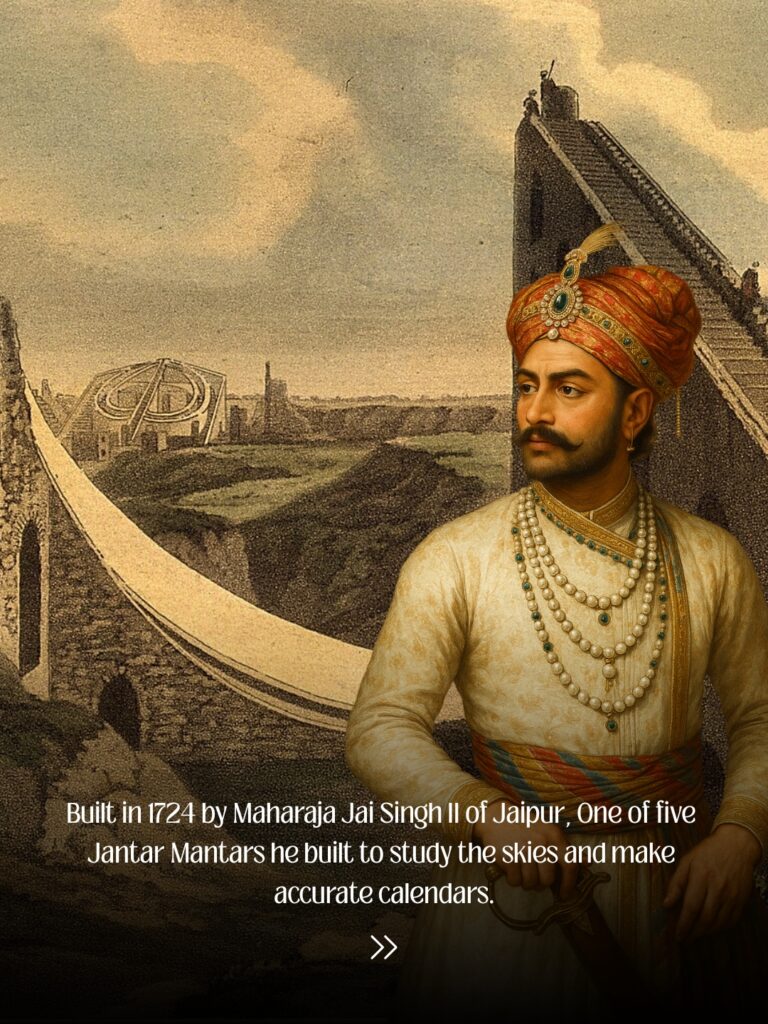
Jantar Mantar was built in 1724 by Maharaja Jai Singh II of Jaipur, one of India’s most fascinating rulers. Jai Singh was not just a king but a keen astronomer who felt the existing instruments of his time were too small to give accurate readings.
To solve this, he constructed five giant observatories across India — in Delhi, Jaipur, Ujjain, Varanasi, and Mathura. The Delhi Jantar Mantar is the oldest among them, designed to help scholars compile precise astronomical tables and predict the movements of celestial bodies.
What Makes Jantar Mantar Special
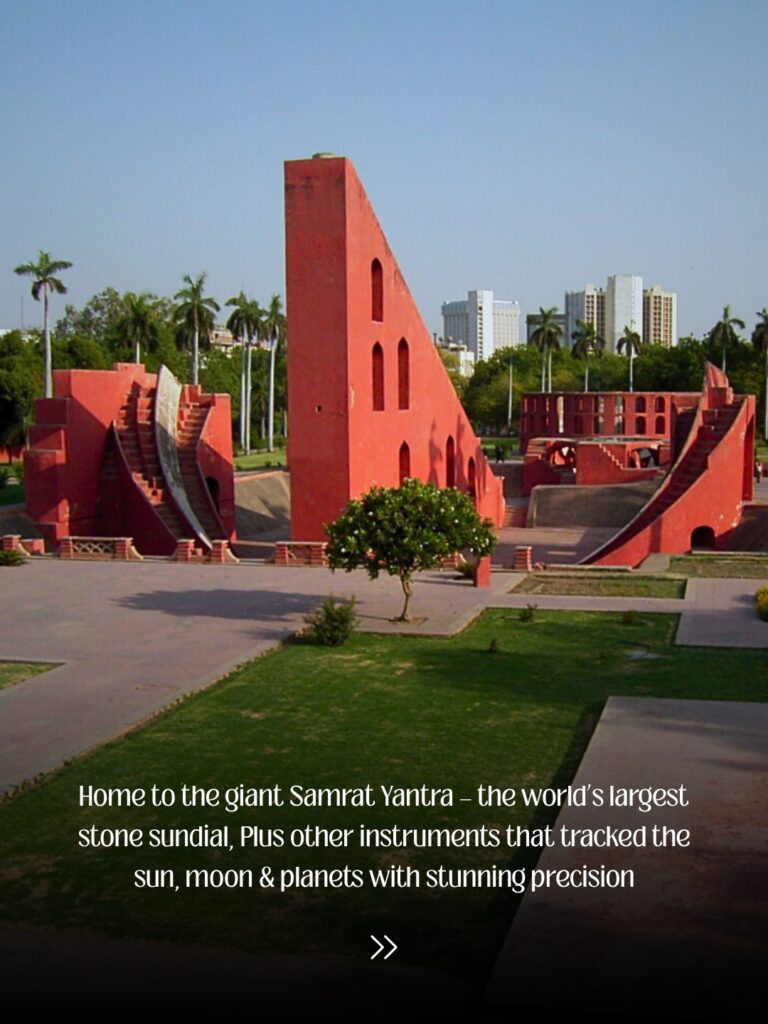
The Delhi Jantar Mantar houses 13 impressive stone and brick instruments, each serving a unique purpose. The highlight is the Samrat Yantra, the world’s largest stone sundial, standing nearly 70 feet high. It can measure time to an accuracy of about two seconds, a remarkable feat for its era.
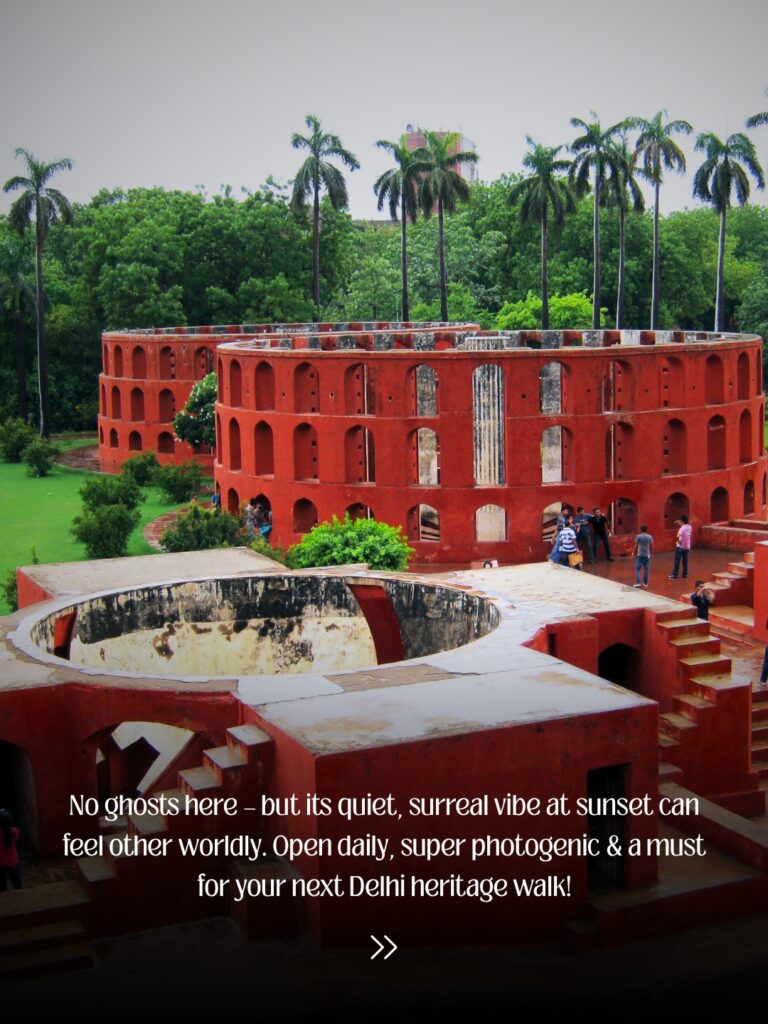
Other instruments, like the Jayaprakash Yantra and Misra Yantra, were used to observe the position of stars and determine the exact noon time in different cities. Together, these architectural wonders turned Jantar Mantar into an open-air laboratory for astronomers centuries ago.
More Than a Monument
Today, while its scientific use has faded, Jantar Mantar remains a peaceful retreat from the surrounding city chaos. Visitors often find themselves marvelling at how accurately these massive structures could map the sky without any modern tools.
Many tourists, photography enthusiasts, history buffs, and school groups visit Jantar Mantar to witness India’s historical contribution to astronomy and mathematics.
Ticket Details & Location
📍 Location:
Jantar Mantar Road, near Connaught Place, New Delhi, Delhi 110001
🎟️ Entry Fee:
-
₹25 for Indian citizens
-
₹300 for foreign tourists
🕰️ Timings:
Open daily, sunrise to sunset.
Best Time to Visit
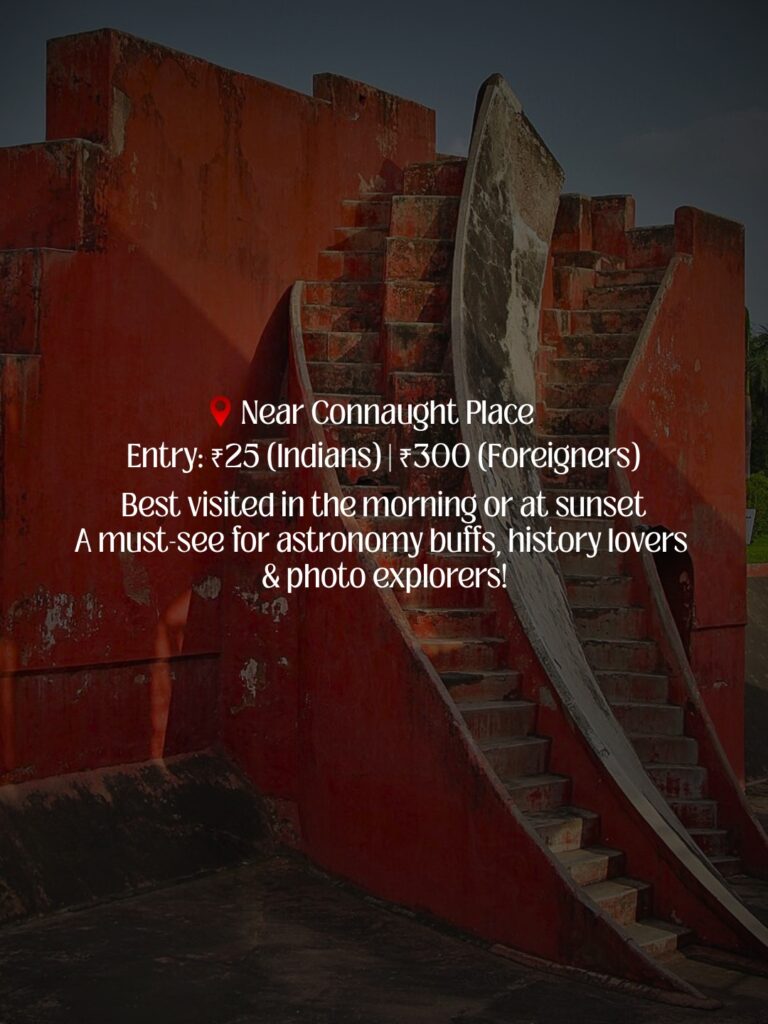
The observatory is open daily from sunrise to sunset, but early mornings or late afternoons are the most pleasant times to explore. The soft natural light during these hours highlights the striking geometry of the instruments, making it perfect for photos.
Why You Should Go
Whether you’re fascinated by astronomy, love heritage architecture, or just want a quiet escape in the heart of Delhi, Jantar Mantar won’t disappoint. It’s an underrated spot that gives you a glimpse into the scientific spirit of India’s royal past.
So, next time you’re wandering around Connaught Place, take a short detour to Jantar Mantar — stand beside the towering sundial, trace the curves of the yantras, and feel connected to a time when kings measured the cosmos with stone and shadows.